
It is an understatement that any Air Force is technology intensive. In the rapidly evolving character of war charged by AI and unmanned systems, keeping an Air Force, a contemporary force needs calibrated vision. Fruition of this vision needs funds. Indian Air Force (IAF) and its growth is no different. Vision in case of Indian Air Force has to be not only worldly wise but also focused on its active borders and two extremely active adversaries namely China and Pakistan. The challenges faced by IAF in short terms i.e. till 2030 are sixfold: Squadron deficit Crisis i.e. structural challenge, MRFA / Rafale delays, AMCA timeline, China-Pakistan nexus, Force multiplier gaps and Technology sovereignty. This document will discuss these challenges one by one.
The Structural Challenge — Beyond the Numbers
India’s air power challenge is not simply a “numbers gap” — it is an institutional and ecosystem gap heightened by the way air power is conceived, funded, and integrated. The May 2025 conflict demonstrated India’s ability to conduct precision “non-contact” warfare below the nuclear threshold. But it also exposed that Pakistan — armed with Chinese PL-15 missiles, J-10CEs, and AWACS — had reduced the technological gap.
Another factor that has emerged forcefully is the usage of Unmanned Aerial Vehicles (UAVs) – drones and missiles (of all type). Much has been written and spoken in favour of this emerging arm. In the Russo-Ukraine war both sides have used drones. Russia has used manned fighters for firing cruise missiles and precision weapons. Iran has used drones and missiles (both unmanned). Israel and U.S. have not avoided drones but have focused primarily on manned aircraft for bombing. It should be understood that manned aircraft are better suited to the high-end strikes. These strikes are against well defended targets, especially hardened or deep underground ones. Bombers (Stealth or otherwise) and strike fighters can carry heavier payloads, travel farther, and use multiple weapons in one sortie. This is to say that just because UAVs are less costly and are available in numbers they can outrightly replace manned fighters. Drones are excellent for persistent surveillance, cheap attrition, and saturating defences, but they are less survivable in heavily defended airspace. Incidentally drones cannot defend while manned fighters can do offence and defence both. Drones are often the best tool for persistent pressure, while manned aircraft are the best tool for decisive strike. There has to be a happy mix of the two in the arsenal of any worthwhile air force.
India operates 29–31 squadrons vs a two-front requirement of 42 (now internally revised to 56–60 post-Sindoor). Mig 21s have retired. Legacy Jaguars will retire faster than replacements arrive. Even optimistic projections cap out at 35–36 by 2035.Modernising the IAF is as much about procuring more fighters; as it is about redesigning the way India generates, sustains, and employs airpower in a two-front, high-technology battlespace. Drones are a weapon for a weaker force. The heavy lifting and decisive results in a battlefield will still be delivered by manned aircraft and IAF is a long way away from the manned aircraft numbers they need.
MRFA Delays
MRFA is essentially “MMRCA 2.0” – the resurrection of the 2007 Medium Multi‑Role Combat Aircraft tender (126 jets) that collapsed in 2015 after which India initiated G2G purchase of 36 Rafales in 2016. In 2018, the government issued a Request for Information (RFI) for 114 MRFA fighters. The process took its time (Many years) to move to the next step i.e. Request for Proposal (RFP). This long “fighter hunt” has coincided with IAF’s squadron strength dropping to 29–31, creating a genuine deterrence problem. One commentary argues that squadron depletion …. is strategically reckless.[1]
The delay can be traced to basically four main factors namely: Procedural and political caution, make in India plus cost scale,[2] Competing priorities and budget spread,[3] and Indigenous optimism bias.[4] Time taken to finalise a draft RFP was just too long. The roll-on effect of this delay was on Defence Acquisition Council (DAC) not being able to grant Acceptance of Necessity (AoN) and move to financial approvals. Things slowed down further because of the very public Rafale controversy. Strong insistence on local production, high indigenous content and technology transfer –all extremely robust demands but notorious in dragging negotiations for years. The case of availability of funds is another factor. Any system straining at its seams for funds will think multiple times to lock itself into a massive imported fighter until absolutely “necessary”.
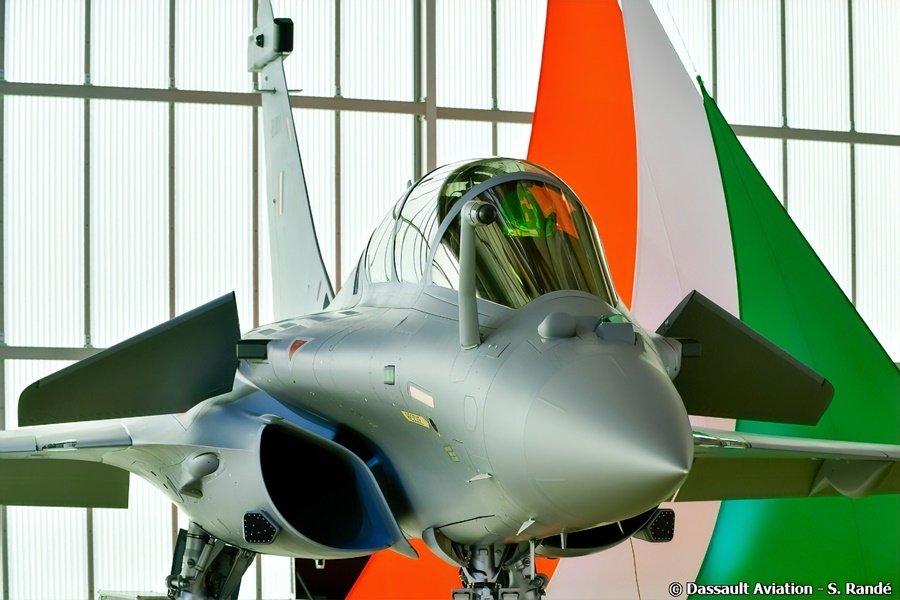
By early 2026, the DAC granted AoN for 114 MRFA Rafale fighters- 18 fly‑away jets and 96 assembled in India at an estimated cost of around ₹3.25 lakh crore. Analysts expect at least a year between AoN and contract signature, and then several more years before the first 18 fly‑away aircraft arrive. Timelines of initial deliveries are around 2032 but Dassault’s production slots are also heavily committed.[5]Major Systemic constraints are HAL’s capacity to deliver 180 Tejas MK IA and 96 Rafales, apart from helicopters and trainer aircrafts. HAL also leads both the development and production of the Tejas Mk II / LCA Mk2), as the prime contractor and design integrator. Too many eggs in one basket and too little in terms of reforms. The study on reforms has not been implemented.
AMCA Timeline
Advanced Medium Combat Aircraft (AMCA) is India’s indigenous twin-engine, single-seat, fifth-generation stealth multirole fighter jet. The AMCA program was launched in 2008 but got sanctioned by Cabinet Committee on Security (CCS) with ₹15,000 crore for prototypes in 2024. It majorly features low-observable design, internal weapons bays, super-cruise, sensor fusion, Uttam AESA radar, and AI-assisted systems.
India’s Aeronautical Development Agency (ADA), working under the Defence Research and Development Organisation (DRDO), is implementing the AMCA programme through an industry partnership model that opens the project to private sector also. Notably absent from this stage is HAL.[6]
The project has been delayed by over 3 years. As a 5th-generation stealth aircraft, the AMCA requires advanced technologies—that India is developing for the first time, causing a slow design and testing phase. The lack of an indigenous engine for the project is a major hurdle. Attempts to find a suitable Public-Private Partnership (PPP) model have added to the delays. Last but not the least Funding and Procurement Delays have been historical bottlenecks.[7]
The prototype is expected to fly around 2029, with development targeted for completion by 2034 and production planned to begin in the mid-2030s.DRDO has announced that the AMCA is expected to be ready by 2035.[8] This timeline when viewed against China mass-producing its fifth-gen J-20 fighters (Having deployed a few along the Line of Actual Control), experimenting with its sixth-gen J-36 prototypes (unveiled in December 2024 and Pakistan looking to procure a fleet of 40 J-35As—China’s second fifth-gen fighters—might already be too delayed. Since there are many “firsts” in this project one needs to be a realist for final operational clearance of the aircraft.[9]
Force Multiplier Gaps
In military aviation, a force multiplier is any capability—such as AWACS, aerial tankers, drones, or advanced networking—that lets a given number of aircraft achieve the combat effect of a much larger force. In other words, these assets are a “multiplication factor”.
In military air power specifically, typical force multipliers include: Airborne early warning and control (AEW&C/AWACS), which in a networked battle space provide a wide-area “eye in the sky”, track multiple targets, and orchestrate fighters and ground-based weapons. Aerial refuelling tankers, which extend fighter range, endurance, and payload—allowing aircraft to launch with more weapons instead of fuel and to conduct multi-mission strikes in a single sortie. ISR assets, which provide persistent surveillance, targeting, electronic intelligence, and gain allowing assets to be used more efficiently. Electronic warfare and robust data-links, which enhance situational awareness and networking, forming the backbone of modern network‑centric warfare.
The Indian Air Force (IAF) faces significant challenges due to shortages in fighter aircraft, force multipliers, and key operational assets, impacting its ability to meet long-term strategic goals. The force -multiplier platforms in India are a potent force, but their numbers are widely judged insufficient for a sustained two‑front conflict.[10]
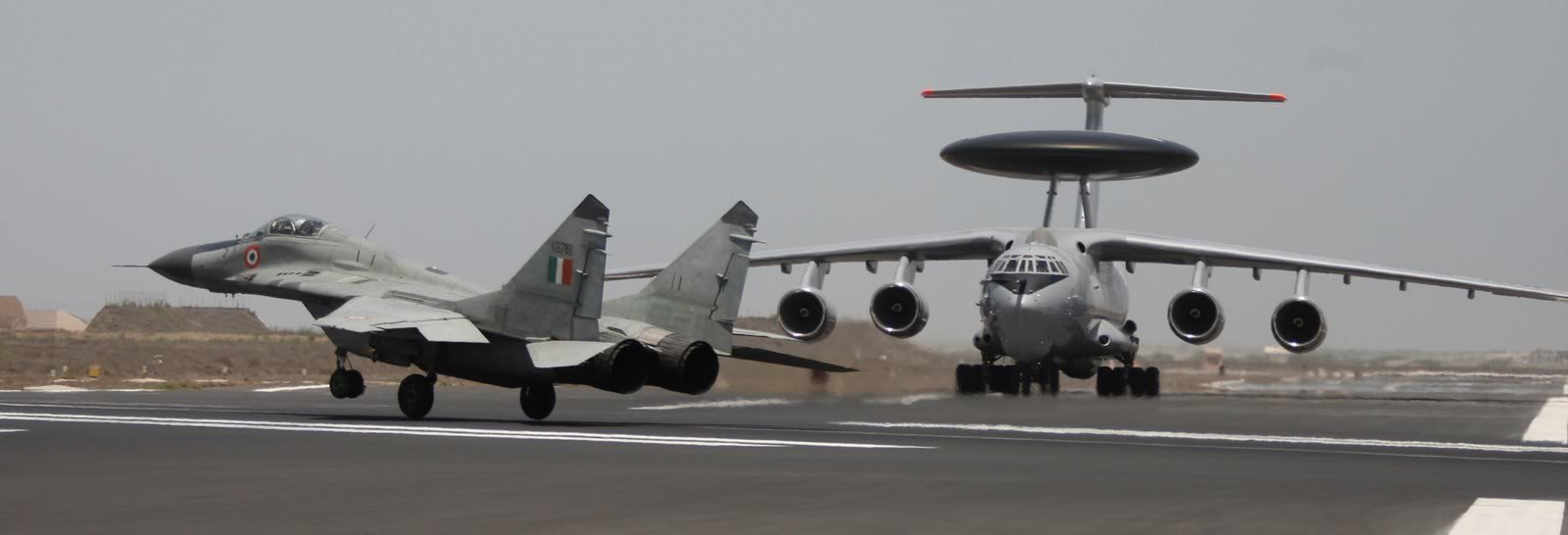
The IAF currently operates a small mixed fleet of airborne early warning assets. This is a critical shortfall, especially when facing a potential two‑front contingency. Need of the hour is a much denser airborne surveillance and battle-management grid. On the positive side, several programmes are in motion to expand this capability namely: The DAC has cleared six additional DRDO AEW&C aircraft (Netra‑1A) on Embraer platforms as follow-ons to the existing systems.[11] The Cabinet Committee on Security has approved a DRDO led AEW&C Mk‑2 project.[12] Here six Airbus A321 airframes will have a 360‑degree radar supported by state of the art links. The timelines are long, and the present decade will remain a period of relative vulnerability in terms of airborne surveillance, especially against rapidly modernising PLAAF and PAF capabilities.
Aerial refuelling is a cornerstone of modern air operations, allowing fighters and other aircraft to fly farther, loiter longer, and carry heavier weapon loads by topping up fuel in the air. The IAF operates six Il‑78MKI flight-refuelling aircraft acquired in 2003–04. Audits have shown that due to chronic issues of spares and other maintenance issues serviceability of the Il‑78 fleet is below par. Since 2006, there have been at least four attempts to acquire modern Multi‑Role Tanker Transports (MRTT). Now the DAC has cleared six second‑hand Boeing 767 airliners to be converted into tankers by Israel Aerospace Industries, with delivery of the first tanker sought from about 2030.[13]
Technology sovereignty
While India has made significant strides in increasing domestic production, true strategic autonomy in air power remains challenging due to heavy reliance on foreign technology for core electronic and digital systems. A recent expert commentary states that India cannot be truly self-reliant in air power if it only assembles imported platforms at home while key digital and electronic layers remain foreign-controlled.[14]
Key challenges in this area are: Assembly vs. Design, Foreign-Controlled Electronics and the Silicon Choke Point.[15] Much of India’s “indigenous” manufacturing is license production. Critical components—including advanced avionics, radars, microprocessors, and flight controllers—are still largely imported. India’s defense electronics sector relies heavily on foreign-fabricated semiconductors, which are vital for communication, AI-enabled systems, and drone controllers. Defence R&D expenditure is relatively low compared to global leaders. Indigenous innovations often face funding bottlenecks. A highly specialized workforce is required to design, manufacture, and maintain advanced electronic warfare and communication systems. Another issue is supply-chain vulnerability. Issue of interoperability versus sovereignty is best explained when there are compatibility problems and dependency on vendor ecosystems for integration with Indian platforms.
The digital backbone of air warfare: communications, cyber protection, electronic warfare, ISR, and AI-enabled decision support is most affected. These domains matter because they shape how fast the IAF can detect, decide, and strike, and they are often the areas where foreign intellectual property creates the issues. Chief of Integrated Defence Staff Air Marshal Ashutosh Dixit while speaking at Ran Samwad 2026 in Bengaluru said atmanirbharta (self-reliance) in defence was not just about making weapons in India but also ensuring technological sovereignty.[16]
The Ministry of Defence has released lists of items that can only be purchased from local companies, forcing a shift from import to domestic production. Production-Linked Incentive (PLI) Schemes are fostering a domestic manufacturing ecosystem. Over 1,000 defense startups are engaged to drive innovation in AI, anti-drone systems, and electronic warfare, shifting from assembly to indigenous design ownership. The LCA Tejas program has achieved significant indigenization in flight control systems, with the LCA Mark2 and AMCA programs focusing on building high-grade native digital flight control computers and mission computers. Work is progressing on 6th generation flying wing design, which includes advanced avionics, software, and autonomous control systems. DRDO has developed an advanced active electronically scanned array (AESA) radar[17], which is intended to equip LCA Tejas and other aircraft. Development of the first indigenous photonic radar, which uses light waves for tracking, is underway to provide superior detection capabilities. A ₹76,000 crore incentive scheme is in place to establish semiconductor fabrication units and assembly facilities. Through the iDEX framework, startups and academia are working with DRDO to develop indigenously designed embedded systems and microprocessors for defense applications. The government is investing in compound semiconductor fabs and sensors essential for high-frequency radars and avionics.[18]
China’s J-20/J-35 deployment pace
Experts widely view China’s J-20 and J-35 deployment pace as rapid. It is transforming the PLAAF into a potent fleet which could have a quantitative edge in the Indo-Pacific. Production of J-20/J-35 has been scaled from ~20/year in early 2020s to 100–120 J-20s annually, with J-35 entering low-rate production (LRIP) at 50–70/year and ramping higher; projections see 1,000+ J-20s and 200–300 J-35s by 2030.[19]
J-20 “Mighty Dragon” is likely to be China’s cornerstone 5th-gen fighter. Produced at a rate of 70 to 80 aircraft per year from mid-2024 and reaching 320 to 350 units. The J-20 has become the cornerstone of China’s modernization. Within this context, the prospect of a production capacity of up to 400 fighters per year by 2027, shifts the focus to mass production. Such an industrial scale, redefines transpacific benchmarks.[20]
The carrier-based J-35 (Shenyang FC-31 derivative) is in Low-Rate Initial Production (LRIP, ~57 built by late 2025). Experts estimate an annual output of 70 to 100 units with 200–300 by 2030 at accelerating rates.[21] Shenyang plans to double J-35 output over five years, spanning the land-based J-35A and carrier-capable J-35B.[22] Full-scale production is expected to begin in 2026 at a significantly expanded new “Shenyang Aerospace City” industrial zone, with an investment of 8.6 billion yuan ($1.2 billion). A retired NATO-nation intelligence officer assessed that “the surge of J-35 production is likely to move forward at a speed that most US or European modern military aircraft production enterprises would find difficult — if not impossible — to keep pace with.”[23]
The Pakistan Dimension
Following Operation Sindoor, Pakistan’s government confirmed that China offered to sell it forty J-35 fifth-generation fighter jets, KJ-500 airborne early warning and control aircraft, and HQ-19 ballistic missile defense systems. Pakistan is poised to receive an initial batch of J-35E fifth-generation stealth fighters between 2026 and 2027. For Beijing, the prospective transfer represents a strategic opportunity to validate an export-configured fifth-generation platform in a high-threat operational environment, effectively using an allied air force as a live operational laboratory while reinforcing long-term strategic dependence.[24]
To summarize, IAF faces a multi-dimensional challenge ranging from shrinking squadron numbers, aging fleet, absence of fifth-generation aircraft, shortfalls in force multipliers, and a constrained budget. While modernisation programmes (AMCA, Tejas Mk2, 114 Rafale deal) are underway, their timelines remain sluggish. Operation Sindoor in May 2025 has sharpened urgency, but structural reforms in procurement, funding, and indigenization remain the critical unresolved challenges.
[1] The Great MRFA Competition: Mother of All Deals – G2G Best Option, Air Marshal Anil Chopra (retd) Dec 31 2024, Indian Aerospace and Defence Bulletin IIII https://defence.in/threads/iaf-prepares-for-massive-114-mrfa-tender-while-urgently-weighing-40-more-rafales-to-bridge-immediate-capability-gaps.Jaydeep Gupta Apr 26, 2025
[2] Bridging The Skies: India’s 114 Rafale Order as Strategic Imperative, Feb 19 2026 Indian Defence News
[3] Delay in Developing Navy’s Twin Engine Deck-Based Fighter Aircraft Could Again Compel India to Import Rafale, Rahul Bedi Apr 02 2026, The Wire
[4] LCA Mk1A Delayed, MRFA on Slow Mode — Implications for IAF, Air Marshal Anil Chopra (retd ) Sep 2024 SP’s Aviation
[5] 114 Rafale jets, 60 transport aircraft, AEW&C, Tejas MK1A deals to be finalised this year in IAF modernisation push Mar 24, 2026, The Economics Times
[6] India’s AMCA stealth jet set for export as New Delhi targets global fighter market Jay Menon Mar 16, 2026, Aerospace Global News
[7] Can India close the stealth gap in air defence? Pradip R. Sagar Apr 9, 2025 India Today
[8] DRDO Outlines AMCA Fighter Jet Engine Development Timeline April 16, 2025 Aviation Space
[9] India approves full development of fifth-generation fighter Gordon Arthur Mar 14, 2024 Defence News
[10] IAF’s Challenges and Key Solutions Air Marshal Anil Khosla (Retd), 02-2025 (https://www.sps-aviation.com/story/?id=3694&h=IAFs-Challenges-and-Key-Solutions)
[11] Cabinet Clears Six AEW&C Aircraft Worth ₹19,000 Crore For IAF Team Bharatshakti -Aug 20, 2025 (https://bharatshakti.in/cabinet-clears-six-aewc-aircraft-worth-%E2%82%B919000-crore-for-iaf/)
[12] Cabinet Committee on Security Clears Six AEW&C Aircraft, Issue: 09-2021 (https://www.sps-aviation.com/story/?id=3004&h=Cabinet-Committee-on-Security-Clears-Six-AEWandC-Aircraft)
[13] India Approves Boeing 767 Tankers to Fill Long-Standing Refueling Capability Gap Parth Satam Jan 14, 2026( https://theaviationist.com/2026/01/14/india-approves-boeing-767-tankers/#deny)
[14] DRDO Chief Flags Risks Of Foreign Dependence, Calls For Full-Spectrum Defence Self-Reliance, Times of India Apr 08, 2026 (https://timesofindia.indiatimes.com/videos/news/drdo-chief-flags-risks-of-foreign-dependence-calls-for-full-spectrum-defence-self-reliance/videoshow/130113252.cms)
[15] India’s Defence Electronics Sector: Challenges and Opportunities,( https://amitytechnologies.co.in/indias-defence-electronics-sector-challenges-and-opportunities/#:~:text=Key%20Challenges%20in%20India’s%20Defence,with%20special%20focus%20on%20electronics.)
[16] All-round arms ‘atmanirbhar’ call: Air Marshal seeks tech sovereignty for defence self-reliance, Imran Ahmed Siddiqui Apr 10,2026, The Telegraph.online (https://www.telegraphindia.com/india/air-marshal-ashutosh-dixit-seeks-tech-sovereignty-for-defence-self-reliance-prnt/cid/2155390#goog_rewarded)
[17] https://www.facebook.com/indiandefencetime/posts/indias-indigenous-uttam-aesa-radar-developed-by-drdo-has-been-officially-stated-/857529613845176/
[18]https://ism.gov.in/#:~:text=The%20Scheme%20for%20setting%20up%20of%20Compound%20Semiconductors%20/%20Silicon%20Photonics,(ATMP%20/%20OSAT)%20units
[19] China Churns Out J-20, J-35 Stealth Fighters at Breakneck Speed; 1300 Jets Likely By 2030. A Wake-Up Call? Vijainder K Thakur -Jan16, 2026 The Eurasian Times
[20] With 400 J-20, J-35 and J-16 aircraft produced annually, China is preparing to replicate its naval strategy with fighter jets. Fabrice Wolf Mar 23, 2026 Meta Defense (https://www.meta-defense.fr/en/2026/03/23/day-20-day-35-day-16-400-hunters-year-2027/)
[21] China’s J-20 and J-35 Stealth Fighters Have 1 Massive Advantage over the U.S. Air Force Steve Balestrieri Nov 20, 2025 National Security Journal
[22] China’s J-35 jet maker flexes production muscle, pledging to double output in 5 years, Amber Wangin Jan 9, 2026, South China Morning Post
[23] The New China J-35 Stealth Fighter Threat, Reuben Johnson Jan 18, 2026, 1945 (https://www.19fortyfive.com/2026/01/the-new-china-j-35-stealth-fighter-threat/)
[24] Pakistan Poised to Receive China’s J-35E Stealth Fighters by 2026–27, Signalling a Major Shift in South Asia’s Air Power Balance, Admin Jan 4, 2026 Defense Security Asia


