
In an exclusive interaction with Life of Soldiers, Dr. Vivek Lall, Chief Executive of General Atomics Global Corporation, shares his perspectives on the evolving role of unmanned systems in India’s maritime security architecture. The conversation explores the strategic significance of the MQ-9B SeaGuardian, emerging technologies in maritime warfare, indigenous industrial participation and the future of India–US defence cooperation. Dr. Lall also outlines India’s potential to emerge as a global hub for unmanned aerospace technologies.
LoS: India’s acquisition of 31 MQ-9Bs, including 15 SeaGuardians for the Indian Navy, represents a significant expansion of its unmanned capabilities. Beyond persistent surveillance, how do you envision these platforms fundamentally changing the Indian Navy’s operational doctrine across the Indian Ocean Region?
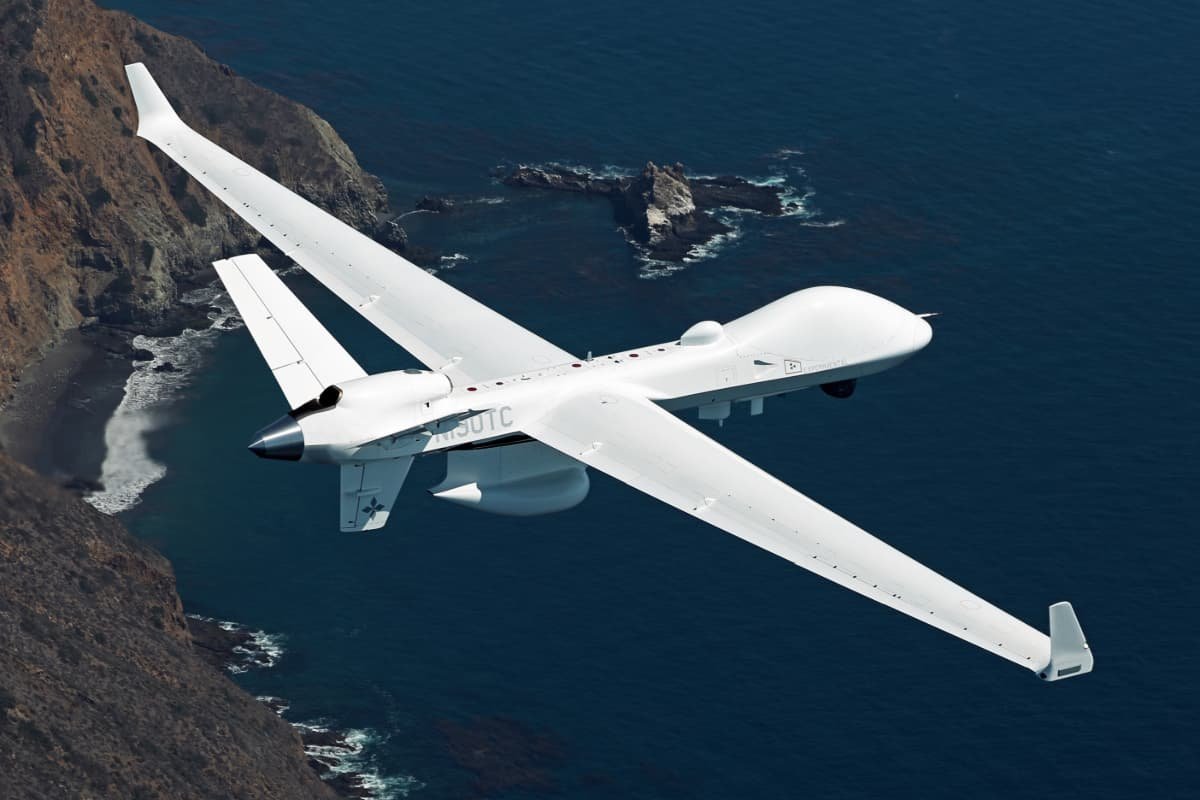
Dr. Lall: India has quickly become a global leader in unmanned systems with their purchase of MQ-9B remotely piloted aircraft from General Atomics. When you can fly for 30 hours or more, depending on payload, you can cover huge distances and spend an extensive amount of time watching areas of interest in very fine detail. It also enables more global alignment between like-minded nations that are taking advantage of assets like MQ-9B across the Indo-Pacific region.
Yes… General Atomics’ aircraft enable operators to collect intelligence like no other platform can, but they also make possible a number of new operational choices for India. Time will tell which options they choose to prioritize, but we have already seen how the Indian Navy has used MQ-9B to support a mission in which they helped rescue a ship from pirates. These are the kinds of mission diversification coming to the Indian armed forces. Having more aircraft will only increase the options they have to handle these missions.
—-
LoS: With India signing an additional 30-month lease for two MQ-9B SeaGuardians in August 2026, what operational and technological lessons from the Navy’s experience with leased aircraft can shape the induction and deployment of its permanently acquired fleet?
Dr. Lall: For specifics about their experience, please reach out to the Indian Navy.
In broader terms regarding experience and lessons learned from MQ-9B SkyGuardians and SeaGuardians deployments, I would say that they provide a strategic capability that significantly enhances national security. With MQ-9B, Indian military users can fly farther than anything else in this category, which allows them to spend more time in the air and handle a greater diversity of missions than any similar aircraft.
—-
LoS: As submarine activity and undersea competition intensify across the Indo-Pacific, how can SeaGuardian’s maritime sensor capabilities, including sonobuoy-enabled operations, complement conventional maritime patrol aircraft in detecting, tracking and responding to underwater threats?
Dr. Lall: Anti-Submarine Warfare – or ASW –is becoming an increasingly sought after capability. That includes the expansion of sonobuoy capacity to provide wider maritime coverage. Being able to expand includes things like Multi-static Active Coherent (MAC) buoy technology for SeaGuardian, which has become an integral part of our advanced ASW strategy to broaden and enhance search areas.
In terms of operational advantage, it comes down to MQ-9B providing persistent mission surveillance over long periods of time without the worry of pilot fatigue. The human crew operates the aircraft from a ground control station that can be sited anywhere, which means that crewmembers can check out after a shift to let new ones check in, all while the aircraft remains on station.
That comes in handy when monitoring large areas of ocean. With other assets, you can’t give the crew rest without bringing the whole aircraft back and taking it off station.
—-
LoS: Recent conflicts have demonstrated that even sophisticated, unmanned aircraft face threats from integrated air defences, electronic warfare and communications disruption. How is General Atomics addressing the survivability and operational resilience of MQ-9B platforms in increasingly contested maritime environments?
Dr. Lall: We always start by noting that everything that flies are vulnerable in the right – or shall I say wrong – circumstances. Look at the troubles the U.S. Air Force has had in and around Iran with every type of combat aircraft. Without unmanned aircraft, it would have a serious dilemma: either send traditional aircraft with the major risk that their crews could be killed, hurt or captured – or be forced out of operations altogether in critical areas. Uncrewed aircraft can take risks in a way that traditional warplanes just cannot. That is a huge advantage. Mindful of this, we’re advancing the survivability of MQ-9B through new capabilities.
In 2021, we announced the development of a Self-Protection Pod. In 2024, we announced development of the Airborne Battlespace Awareness and Defense (ABAD) capability. So, we have multiple self-protection options available, and we continue to evolve those systems and discuss them with governments who fly our aircraft.
—–
LoS: Persistent surveillance generates enormous volumes of intelligence, but operational superiority depends on how quickly that intelligence becomes actionable. How does General Atomics envision AI-enabled processing, sensor fusion and secure data sharing transforming the SeaGuardian into an integral component of the Indian Navy’s network-centric warfare architecture?
Dr. Lall: From a GA standpoint, autonomous systems are becoming a critically important component of modern airborne surveillance platforms – they’ve essentially become the backbone that makes these systems the most effective.
Modern surveillance platforms generate massive amounts of data from multiple sensors (radar, electro-optical, infrared, signals intelligence, etc.). Software is essential for many things, including the correlation of data from different sensors into coherent intelligence, filtering out noise and irrelevant information, managing and storing terabytes of collected data, and enabling real-time analysis during missions.
Put simply, autonomy is transforming what these platforms can do. And it’s aided in areas like automatic target recognition, pattern detection, and predictive analytics, as well as reducing workloads.
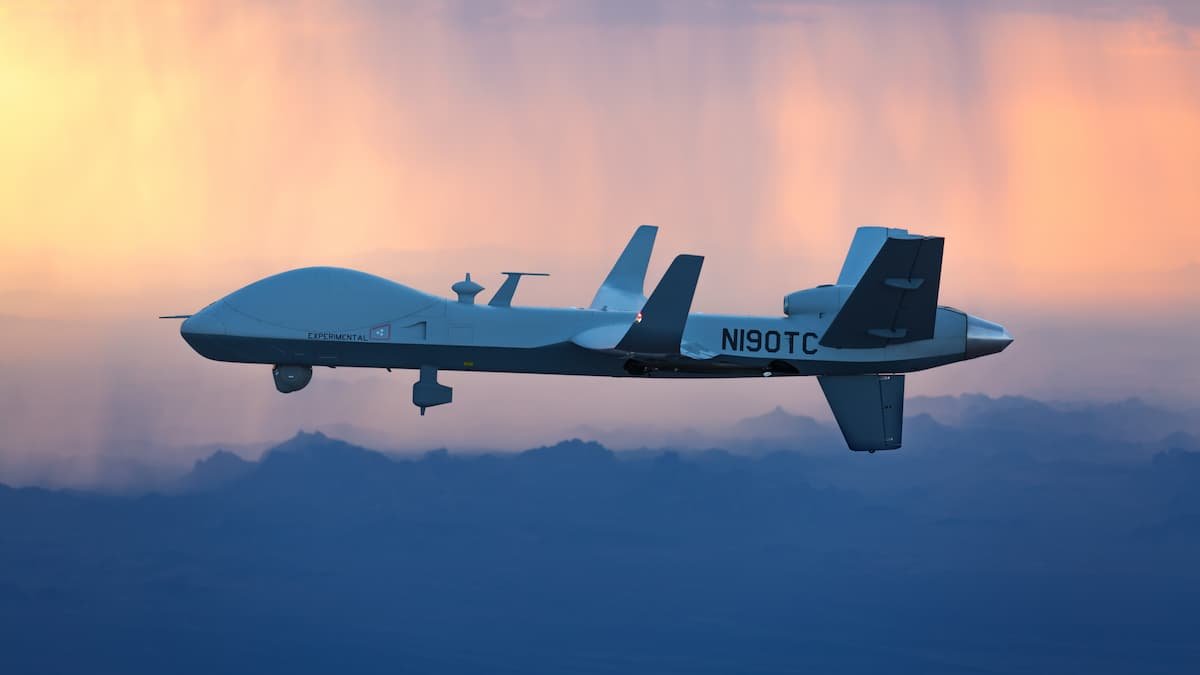
Critical to translating the data collected by the aircraft’s onboard sensors into actionable intelligence includes products such as our Optix, which allows operators to control multiple payloads simultaneously and generate intelligence products in real time with its TacSit-C2 module. These systems take the intelligence gathered by the MQ-9B and interpret and distribute it seamlessly so that navies, coast guard agencies, border authorities, or others can decide and act better and faster than ever before.
—–
LoS: General Atomics has committed to Indian industrial participation and domestic maintenance capabilities for the MQ-9B programme. Beyond maintenance, repair and overhaul, what realistic opportunities exist for Indian companies to participate in advanced payloads, mission software, electronics and future unmanned-system development?
Dr. Lall: General Atomics is committed to Prime Minister Modi’s ‘Make in India’ strategy and we’re looking forward to establishing even more partnerships and collaborations with Indian companies as we move forward. GA is actively engaging with the Indian tech industry, and there will be a significant amount Indian content on these aircraft.
I believe there are a lot of opportunities for large, medium, and small Indian companies. We’ve already announced partnerships with Indian companies like Bharat Forge, Larsen & Toubro, and several others.
With 114ai, we are looking forward to working on NextGen AI technologies. AI is an important area of cooperation between the U.S. and India and GA sees the capabilities demonstrated by the 114ai team as extremely valuable for military operators. Their technology, track record and tenacity with customers in the U.S. and U.K. has stood out to us. We expect many world-leading products to come out of this partnership.
As for semiconductors, working with 3rdiTech is pivotal to us as semiconductors are really the defining technology of this era. The team and capability being developed at 3rdiTech are representative of the new India under Prime Minister Modi’s leadership. GA will work with 3rdiTech, one of the inaugural winners of the Indian Ministry of Defence’s flagship iDEX Program, to transition this cutting-edge capability onto some of India’s platforms.
To see what’s possible, take a look at some of the other international programs we’re running – including with the United Kingdom, Canada or the Netherlands, for example. Building these kinds of partnerships is really important to our company.
—–
LoS: The MQ-9B programme represents an important milestone in India–US defence cooperation. What would it take to move this relationship from platform acquisition towards joint innovation, intellectual-property development and globally competitive unmanned technologies, while accommodating India’s strategic autonomy?
Dr. Lall: From a General Atomics’ perspective, India represents not only a market for our unmanned systems, but also the opportunity to partner on collaborative development. India has the talent base, the industrial ambition, and a supportive policy environment for aerospace manufacturing. The opportunity is not only to build platforms; it is to build an ecosystem, components, subassemblies, payload integration, software, training, and long-term sustainment.
As I see it, the considerations for India are quality systems, supply chain resilience, protection of intellectual property, and a predictable regulatory environment that supports international customers. If India can provide those things consistently, it becomes a compelling manufacturing and sustainment base for serving markets across the Indo Pacific and beyond.
The most credible path is to align production with Indian operational needs first, then prove performance and sustainment outcomes, and then scale toward regional export opportunities where India’s cost, talent, and geography create an advantage.
If India can get those fundamentals right, it can be more than a customer. It can be a strategic hub.


