
“I am fully conscious of the responsibility assigned to me, and I assure the country and fellow citizens that the Indian Army is fully capable and ready to face all current and future challenges. It will be my endeavour to ensure that the Indian Army is always ready to operate in the full spectrum of conflict, maintaining complete synergy with the Indian Navy, Indian Air Force, and other stakeholders. This vision aligns with the broader national vision of Viksit Bharat 2047, aiming for a developed and self-reliant India by 2047…the geo-political landscape is changing rapidly and technology is evolving at a very fast pace.”
-Indian Army Chief, General Upendra Dwivedi (2024)
India is the world’s fourth largest defense spender and the intake and outlay of defense sector as well as expenditure is an evidence for the same. India has always been proactive in spending on armed forces modernisation and the same has seen an intensely noticeable shift after the pandemic struck the world. While Aatamnirbhar Bharat has played its role, the same has been pushed by relatively newly emerging geopolitical threats.
These include the chaotic situation that is persisting and simmering since long in the Trans-Atlantic, American and European arenas of influence, and the effect of the same on Caribbean, Asian, South-East Asian and Pacific worlds, as well as, vice-versa. India has been steady enough in her approach, and has reduced the growing import reliance, as well as strengthening the export capabilities, that are much required in today’s ever-changing and dynamic world situations.
During the ‘New Age Military Technologies: Industry Capabilities and the Way Forward’ conference organised by the FICCI, Lt. Gen. Amardeep Singh Aujla, Master General Sustenance of the Indian Army (4th July, 2025, DD News Transcript), was the face behind the unveiling of “comprehensive modernisation roadmap aimed at transforming its capabilities across multiple domains, ranging from hypersonic weapons to advanced soldier systems, as it prepares for the challenges of future warfare” (DD News).
Lt. Gen. Aujla further added in the conference, “that there must be a call for unprecedented collaboration between the military, industry, and policymakers to accelerate self-reliance and innovation in the defense technology.” This shows the comprehensive approach of the armed forces to integrate literally all sectors in the strengthened defense paraphernalia of the nation, which is the righteous approach and should be undertaken much more seriously now, when the geopolitical scenario changes numerous times even in single blink of the eye.
It was further added at the same event that the armed forces intends to change the deterrence equation by ultra-fast and highly manoeuvrable weapon systems, and also transition from conventional “dump-category” ammunition to smart, precision, guided munitions. The soldier-centric modernisation is now being stressed upon, in terms of agility and, resilience and endurance. However, it must also be noted that the upper echelons of the armed forces and the governance apparatus of the nation are now apprised and aware of the effective application, and usage of upcoming technologies, machine learning, Internet of Things (IoT) in the combined hybrid warfare structure of the nation, which needs urgent revamp, and “whole-of-the-nation” approach to conquer any enemy, which includes effectively handling the course of narrative warfare as well.
However, the armed forces have been cautious to avoid mere lip service by stating that, “to foster this ecosystem, the Army has called on policymakers to establish defense technology acceleration funds, provide fast-tracked regulatory clearances, and simplify procurement processes. Unless you prepare the environment to support the user and the industry, things won’t work out. It will be just lip service, or it will be a mere slogan” (4th July, 2025, DD News Transcript).
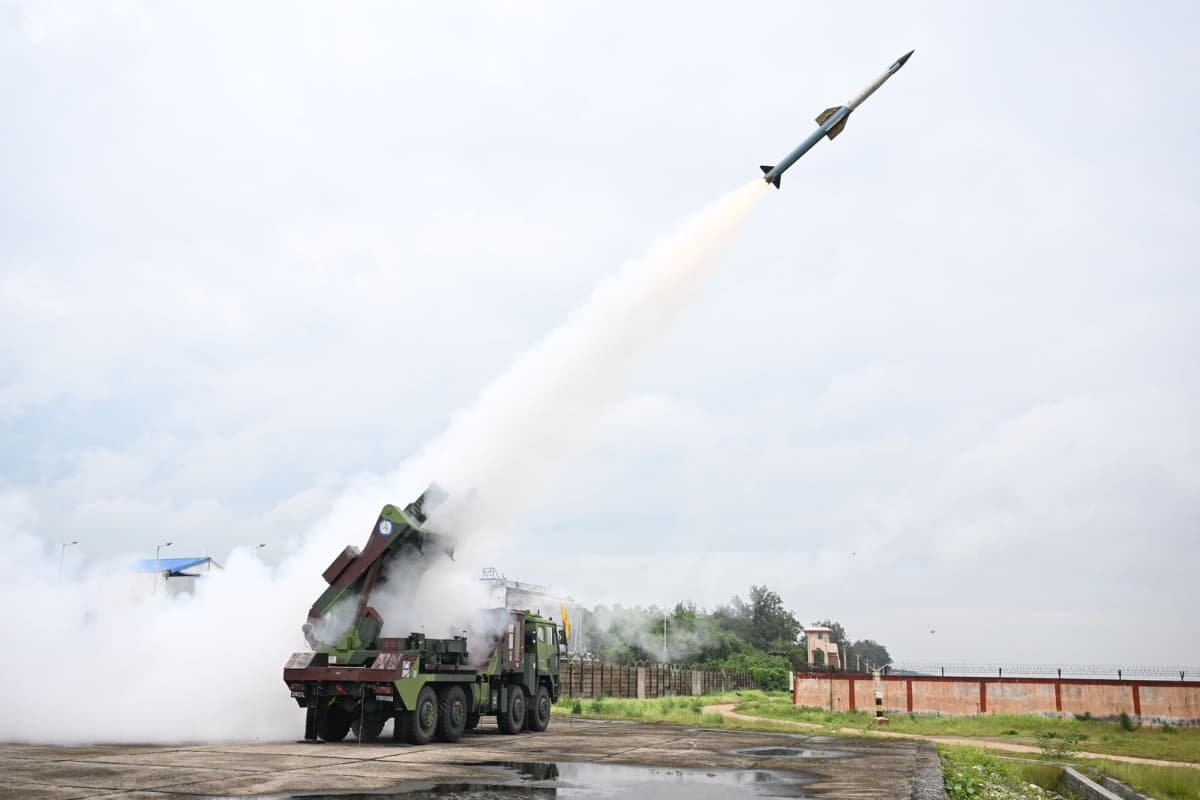
The Indian Army today, undoubtedly undergoing a comprehensive modernisation program that is pin-pointedly focused on building indigenous structures for defense manufacturing, and maintaining as well as increasing the operational capabilities of the defense forces. Niche military structures and apparatuses are now being focused upon, and the same effectively include- technological upgrades (cyber warfare, narrative warfare, usage of AI, Generative AI, machine systems, interoperability operations, etc.), indigenous manufacturing (SRIJAN portal), focusing on innovation and research, developing integrated theatre command structures, modernisation of the artillery of the armed forces of India, as well as developing digitised logistics.
The key highlights of the modernisation roadmap that has been unveiled by the Indian Armed Forces, has succinctly briefed and summed up what actually the India Army sees for itself in the future, and not for itself, but how will the comprehensive working structure of all those concerned in the efforts positively effect the national security paradigm of thenation. This is all the more relevant in the light of modern warfare scenarios, which are not restricted just to the land, air, and traditional sea horizons, but go much more beyond the real world, into the virtual realm as well.
Intelligent, aware, and young professionals who can contribute to the narrative warfare after understanding any given current geopolitical scenario, as well as young innovators, of drone systems, and other innovative warfare systems can be an interesting addition to the government-army-industry-academia cohort. These incidental but quite inevitable aids would definitely help in upping the ante in any given limited war scenario.
Even though advanced weapon systems, cyber and electronic warfare systems, soldier-centric modernisation apparatus, integration of AI-systems, logistics and infrastructure, modernising supply chain through artificial intelligence, block-chain, and IoT; are immensely innovative ideas and proposals, as well as will be becoming reality very soon- the same should aid the nation and the armed forces in developing much more sophisticated systems, minimising human casualty levels, managing border areas with much more sensitivity, and enabling a comprehensive outlook to national security. This shall not only aid in preserving India’s national security, and border-military security, but should also encourage young innovators in India, academicians, students, and researchers to showcase their potential in upholding the dignity as well as the security apparatus of the nation. Jai Hind.


