
Introduction
India’s defence startup surge is real, consequential, and worth taking seriously. Over the past decade, policy initiatives such as Innovations for Defence Excellence (IDEX), [1] revised procurement procedures, and a wider push for technological self-reliance have brought startups into a domain that was once largely dominated by state laboratories, defence public sector undertakings, and a small number of established private firms.[2] The headline number now often cited in public discourse—more than 1,000 defence startups—captures an important shift in the structure of India’s defence-industrial ecosystem.[3] Yet that number, by itself, does not tell us whether India is building military capability at the pace or scale that the strategic environment demands.
The distinction matters. A startup ecosystem can generate ideas, prototypes, and enthusiasm without necessarily producing combat-ready systems that are procured in volume, sustained in service, and trusted by soldiers in operational conditions. In other words, innovation activity is a necessary condition for capability creation, but it is not a sufficient one. The harder question is whether India has built the institutional mechanisms required to convert innovation into induction, and induction into enduring military advantage.
Present status
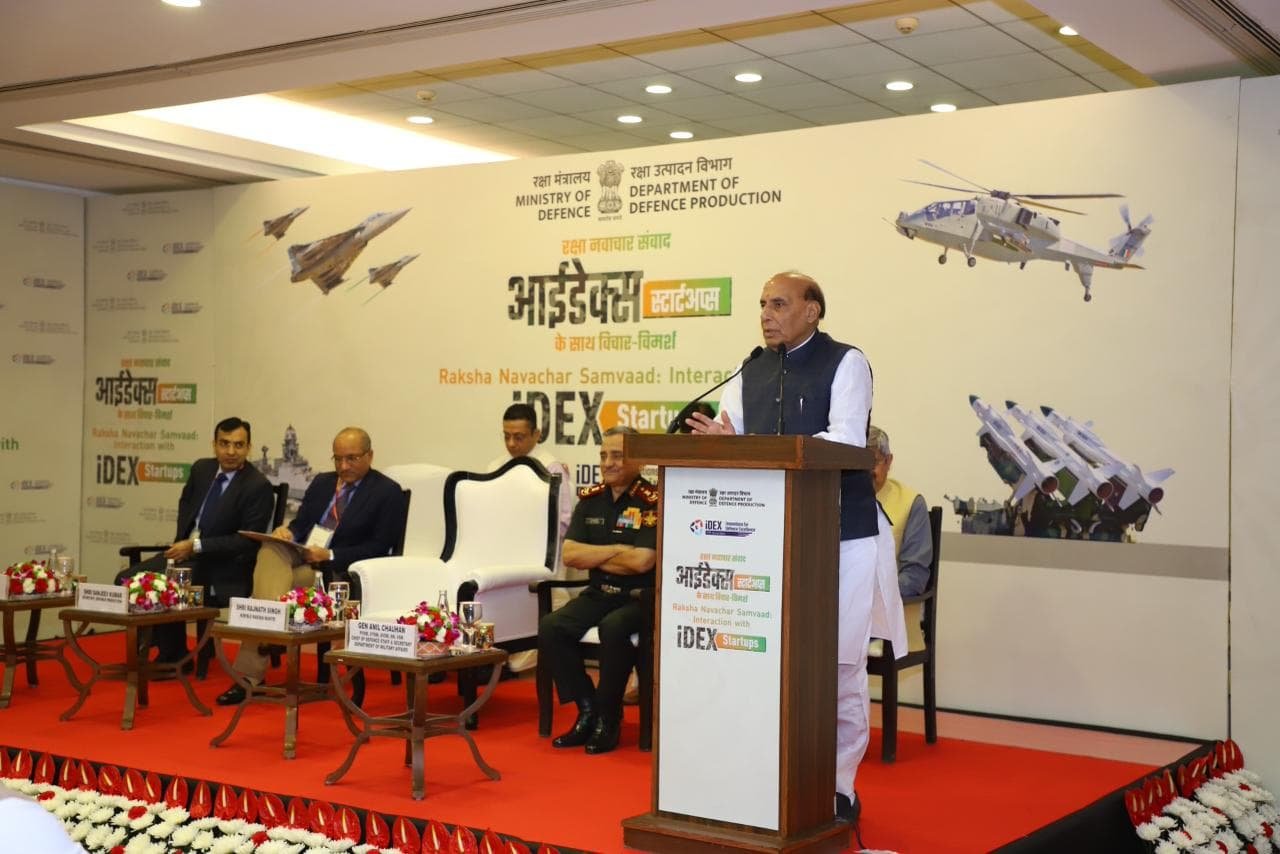
India’s present position is best understood as a transition from exclusion to participation. A decade ago, startups had only limited pathways into defence production and almost no structured mechanism through which military problems could be opened to smaller innovators. The creation of IDEX altered that landscape by providing challenge-based entry points, grant support, and a formal bridge between innovators and the armed forces. [4] This was not a cosmetic change. It signaled official recognition that future military capability would increasingly depend on agile innovation in domains such as drones, artificial intelligence, autonomous systems, secure communications, electronic warfare, and advanced sensing.
India has expanded the innovation funnel, diversified the set of actors working on defence technologies, and encouraged a generation of founders to consider national security as a viable domain for enterprise. The Defence Acquisition Council’s approval of procurement from IDEX-linked startups and MSMEs, and subsequent service-led contracts under revised procedures, suggest that reforms are beginning to produce material outcomes rather than remaining confined to policy intent.[5] Even symbolically, these developments matter: they show that the Indian state is no longer treating startups as peripheral to defence modernization.
Even so, the present status must be described with analytical precision. The defence startup ecosystem is a staged funnel, not a finished pipeline. At the wide end of the funnel are firms registered, incubated, mentored, or funded under innovation schemes. Further down are prototypes developed against specific military problem statements. Narrower still are products that survive technical evaluation, user trials, contracting procedures, and price negotiations. At the narrowest end are systems actually inducted into units, integrated into doctrine, backed by maintenance chains, and available in sufficient numbers to matter operationally. Public discussion often moves too quickly from the first stage to the last.
That analytical difference explains much of the current confusion. When policymakers or commentators cite the growth of startups, they are often measuring ecosystem vitality. When the armed forces speak of capability, they are concerned with reliability, quantity, supportability, and fitness for use under demanding conditions. These are related but not identical measures. India has unquestionably improved the first. Whether it has solved the second remains a more open question which needs to be asked.
The challenges at hand
The central challenge is not the absence of innovation. It is the weakness of conversion mechanisms. India has become better at generating prototypes than at absorbing them into the force structure. That is why the most important bottleneck lies between demonstrated promise and sustained procurement. [6] A country can host hundreds of firms working on drones, surveillance software, loitering munitions, anti-jam devices, or tactical communication systems and still find that relatively few of those efforts produce fielded capability.
The first obstacle is procurement itself. Defence acquisition remains slow, layered, and institutionally demanding even after reforms. Startups are expected to operate on venture timelines, manage cash constraints, and keep engineering teams together, while the buyer often functions on administrative and budgetary cycles that are far longer and less predictable. “With rapidly evolving technology, a seven-year procurement cycle risks acquiring outdated systems. For critical and fast-changing platforms, we must aim for procurement cycles of 18 to 24 months,” Rajinder Singh Bhatia, chairman, Kalyani Strategic Systems, the defence subsidiary of Bharat Forge, and president of the Society of Indian Defence Manufacturers. [7] This mismatch is especially punishing in deep-tech defence, where the path from prototype to order can take years and revenue visibility is weak. For established primes, such delays are frustrating; for startups, they can be existential.
The second obstacle lies in user trials and evaluation. In principle, rigorous testing is unavoidable in defence. No armed force can induct systems merely because they are innovative, locally built, or politically attractive. Military equipment must prove performance under stress, often in varied terrain, weather, and operating conditions. The problem is not that trials exist, but that the cost and risk of repeated trials can overwhelm smaller firms. Reporting in 2026 indicated that the Army was seeking a fund to protect startups from heavy losses during user trials, which is revealing in itself.[8] It suggests official recognition that the present model may expose startups to risks disproportionate to their financial capacity.
A third challenge is scale. Many startups are technically capable of building prototypes or small batches. Far fewer are equipped to deliver reliable production at military standards, maintain consistent quality, and support deployed systems over time. Capability is not just about whether a drone flies during a demonstration; it is also about whether replacement parts arrive on time, software patches remain secure, batteries and sensors are available, and trained teams can service the system years after delivery. This is where the distinction between innovation and militarization becomes stark. The armed forces do not buy isolated technologies; they buy performance across a lifecycle.
Closely linked to scale is the problem of supply-chain dependence. India’s defence discourse often treats indigenization as a matter of final assembly or brand ownership. In practice, strategic autonomy depends on far more granular control over critical sub-systems, components, materials, electronics, and software stacks. A startup may be Indian in ownership and intent yet remain dependent on imported sensors, chips, propulsion elements, imaging payloads, or specialist materials. That does not invalidate its contribution, but it does complicate claims that startup growth automatically equals sovereign military capability.
The fourth challenge is institutional integration. Defence innovation works best when users, developers, testers, procurers, and production partners operate inside a coherent sequence. In India, those links are improving but remain uneven. Startups may receive a problem statement, build a promising solution, and still struggle to find a stable pathway into bulk orders or larger platform integration. Large private firms and defence PSUs could, in theory, serve as scale-up partners, integrators, and sustainment anchors. In practice, these relationships are not yet systematic enough across the ecosystem.
There is also a conceptual challenge that often goes unaddressed. Not every useful technology developed by a startup becomes a decisive military capability. Some products improve efficiency, reduce cost, or fill niche requirements without materially altering force readiness. Others may be dual-use tools with defence applications but limited military specificity. This is not a criticism of startups; it is a reminder that defence capability is hierarchical. Mission-critical technologies that survive operational scrutiny are more important than a broad catalogue of innovations with uncertain military relevance.
Finally, India still tends to celebrate entry more visibly than absorption. Startup counts, demonstration dates, funding, and policy launches are easy to communicate. Induction data, service use patterns, lifecycle support records, and doctrinal adaptation are harder to track and overall, less glamorous. Yet it is the latter that determines whether the armed forces become more capable. Until public metrics focus more sharply on what has entered service and remained viable there, the debate will continue to confuse ecosystem expansion with military readiness.
Successful Defence Innovation
Israel, the US and China show that successful defence innovation does not come from startups alone; it comes from a full ecosystem linking military users, patient capital, testing pathways, industry, and state support. Israel’s[9] strength lies in the tight loop between the IDF, elite technology units, startups and government backing, which helps convert operational problems into deployable products quickly. The US[10] model rests on a deep research base, strong universities, venture capital, and institutions such as DIU, NSIC and the Office of Strategic Capital that help scale innovation into defence capability and secure supply chains. China, by contrast, has relied on strong state direction, high resource allocation, and military-civil fusion to integrate technology development, manufacturing and strategic scaling.[11]
The lesson for India is clear: Atmanirbhar Bharat in defence cannot be reduced to counting startups or issuing policy slogans. India must design, develop and sustain the entire ecosystem—R&D, testing, procurement, finance, production, supply chains, user feedback and export pathways—so that domestic innovation is not merely created in India, but retained, scaled and fielded from India.[12]
The way about / solutions
The way forward does not lie in abandoning the startup model. On the contrary, India needs a larger, deeper, and more resilient defence innovation base. The real task is to strengthen the conversion architecture around it. That means shifting attention from startup creation alone to the institutions that carry technology across the difficult middle stages of validation, procurement, production, and support.
The first requirement is a more credible procurement pathway for successful products. Once a startup has met clearly defined technical thresholds, there should be greater predictability on whether it will receive a limited series order, a pilot deployment, or a pathway to larger induction. Without such visibility, founders are forced to invest in uncertainty, and investors remain cautious about backing defence manufacturing at scale. Procurement reform, therefore, is not an administrative detail; it is central to ecosystem credibility.
Second, India needs a trial-support architecture proportionate to the realities of startup finance. Shared testing infrastructure, staged validation, subsidized access to evaluation ranges, and clearer trial protocols would reduce waste while preserving rigor. Startups should still have to prove performance, but they should not be structurally penalized for lacking the balance sheets of large incumbents.
Third, production partnerships must be treated as a strategic layer of innovation policy. Startups excel at speed, novelty, and technical specialization. Larger firms are often better placed to deliver manufacturing depth, certification experience, field support, and national distribution networks. India’s defence ecosystem will mature faster if these roles are combined rather than kept apart. In sectors such as drones, communications, and autonomous systems, the future may belong less to isolated startup champions than to collaborative production networks.
Fourth, user integration has to begin earlier. The armed forces cannot remain occasional evaluators at the end of the process; they need to shape design choices from the problem-definition stage onward. This would improve requirement clarity, reduce redesign cycles, and increase the likelihood that solutions match real operational needs. Capability is most likely to emerge when the user is embedded in innovation, not merely waiting at the gates of procurement.
Fifth, India has already seen how delayed domestic scaling and weak capital mechanisms can leave promising firms vulnerable to foreign control, whether through outright acquisition, as in Flipkart’s case, or through premature sale of intellectual property and strategic ideas to foreign buyers at [13]low valuations. Press Note 3 (2020) [14] was India’s emergency FDI screening measure that made prior government approval mandatory for investments from land-bordering countries, in order to prevent opportunistic takeovers or acquisitions of Indian companies.
Recommendations
Following recommendations follow. First, India should publish more regular data on the journey from prototype to order and from order to induction; without such transparency, ecosystem claims remain difficult to evaluate. Second, the Ministry of Defence and the services should institutionalize financial protection and procedural support for startups during demanding user trials. Third, successful systems should be moved into limited series procurement faster so that products are tested in service conditions before either scaling or rejection. Fourth, innovation policy should explicitly include sustainment, spares, upgrades, and supply-chain resilience rather than treating them as downstream issues. Fifth, well covered- Product lifecycle approach should lead the discussions. Sixth, IDEX, should facilitate discussions and handshakes between innovators and large SIs to give the necessary boost during the “Valley-of-Death (VoD) stage- something like CII did for offset partners. Seventh, India has recognized the general vulnerability of under-supported innovation to foreign acquisition, and that in strategic sectors this requires a screening and protection mechanism before critical know-how migrates abroad.
Conclusion
India’s defence startup surge is strategically significant, and dismissing it would be a mistake. But equating ecosystem size with military capability is an even bigger one. A thousand startups can widen the search for solutions, accelerate technical experimentation, and expand indigenous participation. They do not, by their mere existence, create deployable force. Capability emerges only when ideas survive trials, contracts move in time, production scales, support systems hold, and the armed forces trust the technology enough to rely on it in consequential situations. India has built the beginnings of that ecosystem. Its next test is whether it can build the institutions that turn entrepreneurial energy into military effect.
[1] Indian Institute of Management, Ahmedabad, “iDEX to nurture 1,000 startups for defence sector in 3 yrs”, November, 20, 2018, https://www.iima.ac.in/news/idex-nurture-1000-startups-defence-sector-3-yrs. Accessed on June 14, 2026.
[2] Press Information Bureau, Ministry of Defence, “Defence Acquisition Council clears procurement of 14 items worth over Rs 380 crore from iDEX startups/MSMEs for Armed Forces”, March22 ,2022, https://www.pib.gov.in/PressReleasePage.aspx?PRID=1808408®=48&lang=2. Accessed on June 14, 2026.
[3] Garg Ishan, Yang Calvin “India steps up defence self-reliance by backing startups and easing arms procurement”, Channel News Asia (CNA), August 27, 2025, https://www.channelnewsasia.com/asia/india-defence-drone-startups-arms-procurement-weapons-manufacturing-military-tensions-5316906. Accessed on June 14, 2026.
[4] Government of India, Department of Defence Production, “IDEX Details”, https://www.ddpmod.gov.in/offerings/schemes-and-services/idex. Accessed on June 14, 2026.
[5] Press Information Bureau, Ministry of Defence, “INDIAN ARMY TAKES LEAD IN AWARDING FIRST CONTRACT FOR IDEX PROJECT AS PER THE REVISED PROCEDURE”, March 14, 2023, https://www.pib.gov.in/Pressreleaseshare.aspx?PRID=1906830®=48&lang=2. Accessed on June 14, 2026.
[6]Dighe Sandip, “Army seeks fund to protect startups from heavy losses during user trials”, Times of India, February 19, 2026, https://timesofindia.indiatimes.com/city/pune/army-seeks-fund-to-protect-startups-from-heavy-losses-during-user-trials/articleshow/128522769.cms. Accessed on June 14, 2026
[7] Kumar Bhaswar, “We Must Aim For 100,000 Defence Startups”, Rediff, October 04, 2025, https://www.rediff.com/business/interview/we-must-aim-for-100000-defence-startups/20251004.htm. Accessed on June 14, 2026
[8] Dighe Sandip, “Army seeks fund to protect startups from heavy losses during user trials”, Times of India, February 19, 2026, https://timesofindia.indiatimes.com/city/pune/army-seeks-fund-to-protect-startups-from-heavy-losses-during-user-trials/articleshow/128522769.cms. Accessed on June 14, 2026
[9] The Israeli Tech Ecosystem, “A Global Innovation Powerhouse”, Israel Innovation Authority, https://innovationisrael.org.il/en/israeli-tech-ecosystem/. Accessed on June 15 , 2026.
[10] J.P.Morgan, “Tapping the United States’ greatest weapon: innovation”, September 18, 2025, https://www.jpmorgan.com/insights/business-planning/defense-tech-innovation-and-the-role-of-startups. Accessed on June 15, 2026.
[11] Siqi Shi, “Chinese companies recognize value in Israeli startups”, Cornell SC Johnson College of Business, March 21, 2019, https://business.cornell.edu/hub/2019/03/21/chinese-value-israeli-startups/. Accessed on June 15, 2026.
[12] Srivastava Hari Babu & Bishoyi Saroj, “Defence Technology – Eco system for Atmanirbhar Bharat”, VIF Report, July 01, 2024, chrome-extension://efaidnbmnnnibpcajpcglclefindmkaj/https://www.vifindia.org/sites/default/files/Defence-Technology-Ecosystem-for-Aatmanirbhar-Bahrat.pdf. Accessed on June 15, 2026.
[13] Government of India, Ministry of Commerce & Industry, , “Press Note No. 3(2020 Series) Subject: Review of Foreign Direct Investment (FDI) policy for curbing opportunistic takeovers/acquisitions of Indian companies due to the current COVID-19 pandemic”, Department for Promotion of Industry and Internal Trade FDI Policy Section, April 17, 2020, chrome-extension://efaidnbmnnnibpcajpcglclefindmkaj/https://cgishanghai.gov.in/pdf/PressNote3_23Nov2022.pdf. Accessed on June 15, 2026.
[14] Sharma Shashikant, “Are Indian Startups Truly Indian? The Hidden Impact of Foreign Investment”, Linkedln, March 30, 2025, https://www.linkedin.com/pulse/indian-startups-truly-hidden-impact-foreign-shashikant-sharma-tcrdc/. Accessed on June 15 2026.


