
Prime Minister Modi reached Israel on 25th Feb 26 and his counterpart Mr Benjamin Netanyahu gave him a warm welcome by receiving him personally (Along with his wife) at the airport. Some critics are billing the visit as a shift of Indian foreign policy from neutral to slow tilt towards west and Israel. The timing of the visit has been targeted citing US (Israel motivated) likely to strike Iran. This article will try to show that the visit is pragmatic, less about sentiment and more mutual benefit across defence, development and diplomacy.
Since the resumption of Indo-Israel ties in 1992, the ties between the two nations have been “symbiotic”. It needs to be acknowledged that both countries face hostile neighbourhoods and persistent terrorism threats. This creates a natural convergence on intelligence sharing, counter‑terrorism, border security, and therefore high‑end defence technology. India also values Israel especially when Israel respects India’s “strategic autonomy”. The shared preference for pragmatic, non‑ideological cooperation underpins why the relationship has deepened steadily since full normalization in 1992.
Speaking about diplomacy, for Israel, India is a major Global South power that provides it diplomatic diversification beyond its traditional Western partners and the immediate Middle East. For India, Israel offers a reliable partner in West Asia that is politically supportive in many multilateral forums, and aligned with New Delhi’s interest in balancing regional powers without being entangled in great‑power patronage. This adds another layer of mutual utility amplifying each other’s regional and global influence.
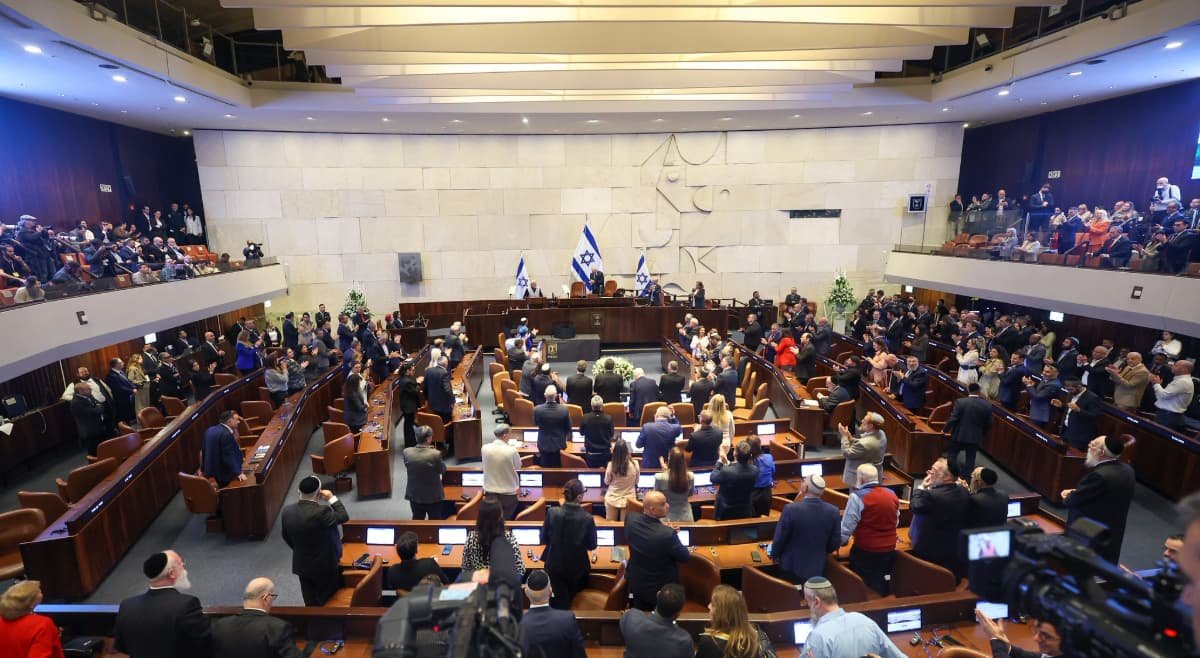
Speaking in Knesset (First-ever address by an Indian Prime Minister to the Knesset) PM Modi grounded the partnership in democracy, pluralism and the rule of law. Echoing his beliefs about India and Israel’s “deep commitment to freedom, pluralism, and the rule of law.” PM Modi invoked concepts such as Tikkun Olam (Jewish idea of “repairing the world”) and Vasudhaiva Kutumbakam (Indian idea of the world as one family) in the Knesset Guest book.
Speaking about defence, the Press statement by PM Modi highlights that both nations took the historic decision to elevate their partnership to “Special Strategic Partnership.” This is a status Israel otherwise reserves for key allies. This codifies deepening cooperation in defence, intelligence, high‑tech and crisis support, moving it from largely quiet, transactional engagement. The statement goes onto state that both countries have decades-old and trusted cooperation in the defence sector. It highlighted that MOU signed last year will add new dimensions to this. Together, both nations will move forward towards joint development, joint production, and transfer of technology underscoring an intent to move beyond a traditional buyer–seller relationship. Statement also spoke about advance cooperation in areas such as civil nuclear energy and space. This kind of co‑development directly supports Make in India and Atmanirbhar Bharat.
Israel and India reiterated that defence relations are an “important pillar” of their partnership and linked them to shared regional security challenges and counter‑terrorism priorities. The November 2025 Defence Cooperation MoU, which is being implemented and expanded through this visit, specifically covers increased collaboration in training, science, technology, research, and development. The MoU highlights areas such as artificial intelligence and cybersecurity as key domains where India and Israel intend to deepen cooperation. The 2026 joint statement places particular emphasis on defence, security, and cybersecurity, signalling that future projects are likely to integrate advanced technologies into weapons systems, command‑and‑control, and surveillance architectures.
Continuing about cooperation and collaboration in defence, it can be said that Operation Sindoor has strengthened India–Israel ties by validating Israel’s defence partnership with India and politically aligning both countries on counter‑terrorism. Israel’s ambassador and consul general publicly backed India’s “right to self‑defence” in Operation Sindoor and praised the strikes as precise and justified, placing Israel among the early and vocal supporters of India’s action against Pakistan‑based terror groups. The operational use of Israeli missiles and other weapons under combat conditions showcased the effectiveness of India–Israel co‑developed and imported systems, reinforcing defence‑industrial trust.
Speaking about Security Framework, the statement states that India and Israel are absolutely clear that terrorism has no place in the world. It stressed that Terrorism, in any form, in any manifestation, will not be tolerated for which both nations have stood shoulder to shoulder against terrorism and its supporters, and will continue to do so. Both leaders also affirmed there is “no place for terrorism in the world,” signalling that fight against terrorism will be centred on intelligence sharing, counter‑terrorism coordination, and homeland security collaboration.
It is important to bring out here that PM Modi in his statement was clear in stating that India’s security interests are directly linked to peace and stability in West Asia. Therefore, India has always supported dialogue and a peaceful solution from the very beginning. Laying out India’s thinking the statement stressed that Humanity must never become a victim of conflict and India will always support The Gaza Peace Plan.
 PM Modi in his statement stressed that economic cooperation (and therefore development) between the two countries was an engine of growth, innovation, and shared prosperity. The statement highlighted that last year; both nations signed a Bilateral Investment Agreement to promote mutual investment and will also soon finalize a mutually beneficial Free Trade Agreement. Focusing on other areas of development the statement has brought out that that an agreement has been reached for the use of UPI in Israel. Sharing experiences in the field of digital health was another sphere of cooperation. Since Technology is central to all future partnership both nations decided to establish a Critical and Emerging Technologies Partnership to cooperation in areas such as AI, Quantum, and Critical Minerals.
Agricultural cooperation was the next area of focus. Centres of Excellence established in India with Israeli cooperation are to increase to 100 bringing Israeli technology to every village in India, Villages of Excellence will be created in an effort to increasing the income and productivity of millions of farmers. The establishment of the India-Israel Innovation Centre for Agriculture will jointly develop future-ready farming solutions. Highlighting that India has made significant contributions to Israel’s construction and care-giver sectors through the 2023 Manpower Mobility Agreement, the statement brought out that cooperation is now being expanded to areas such as commerce and services. Establishing the India-Israel Academic Forum would connecting the youth, researchers, and innovators of both countries. This will be a key priority for both countries. Promoting
regional connectivity, both countries will move forward with renewed vigour on the India Middle East Europe Economic Corridor “I-MAKE” and the India Israel UAE USA (I-2-U-2) Corridor.
The visit has been a step to consolidate and upgrade the India–Israel strategic trade and investment ties. Deeper trade liberalisation with a technology‑rich partner like Israel will boost Indian exports, while making it cheaper and easier for Indian firms to import cutting‑edge components and know‑how. Beyond defence, the visit will strengthen cooperation in high‑tech sectors such as AI, quantum computing, semiconductors and cyber‑security. Israel’s strength in start‑ups and dual‑use (civil–military) innovation could help creating scope for joint R&D, venture investment and start‑up collaboration that can feed into India’s digital‑economy push. The visit has laid the foundation of India‑based industrial collaboration—combining Israeli defence technology with Indian manufacturing capacity. Across mainstream Israeli media, PM Modi’s visit has been portrayed as a clear diplomatic success for both governments and as consolidating a strategic partnership that had already been developing quietly for years. The overall narrative combined enthusiasm about economic‑strategic opportunities.
PM Modi’s 2026 Israel visit is strategically significant. It consolidates and widens an already transformed relationship rather than breaking a new taboo or opening first‑time doors. The current visit is framed by both governments as an “upgrade” and “next phase” of a now‑mature strategic partnership. The visit happened amid a US–Iran standoff and Israel’s international isolation over Gaza, so the pathbreaking element is more about India’s risk appetite and alignment signalling than about institutional firsts. One may say that if 2017 was pathbreaking in form (first visit, breaking old taboos), 2026 is pathbreaking—in substance. Key Arab states, especially in the Gulf, however have reacted cautiously but not confrontationally, partly because they were themselves deepening quiet ties with Israel and valued their growing strategic and economic partnerships with India.
PM Modi’s visit to Israel can be assessed as a watershed because it has diversified beyond defence, and signalled a more interest‑driven and less ideologically constrained Indian foreign policy. This however, depends on how effectively India manages its parallel relationships with Arab states and the Palestinian Authority, and whether it can sustain a credible narrative of supporting a just peace while deepening ties with Israel.


