
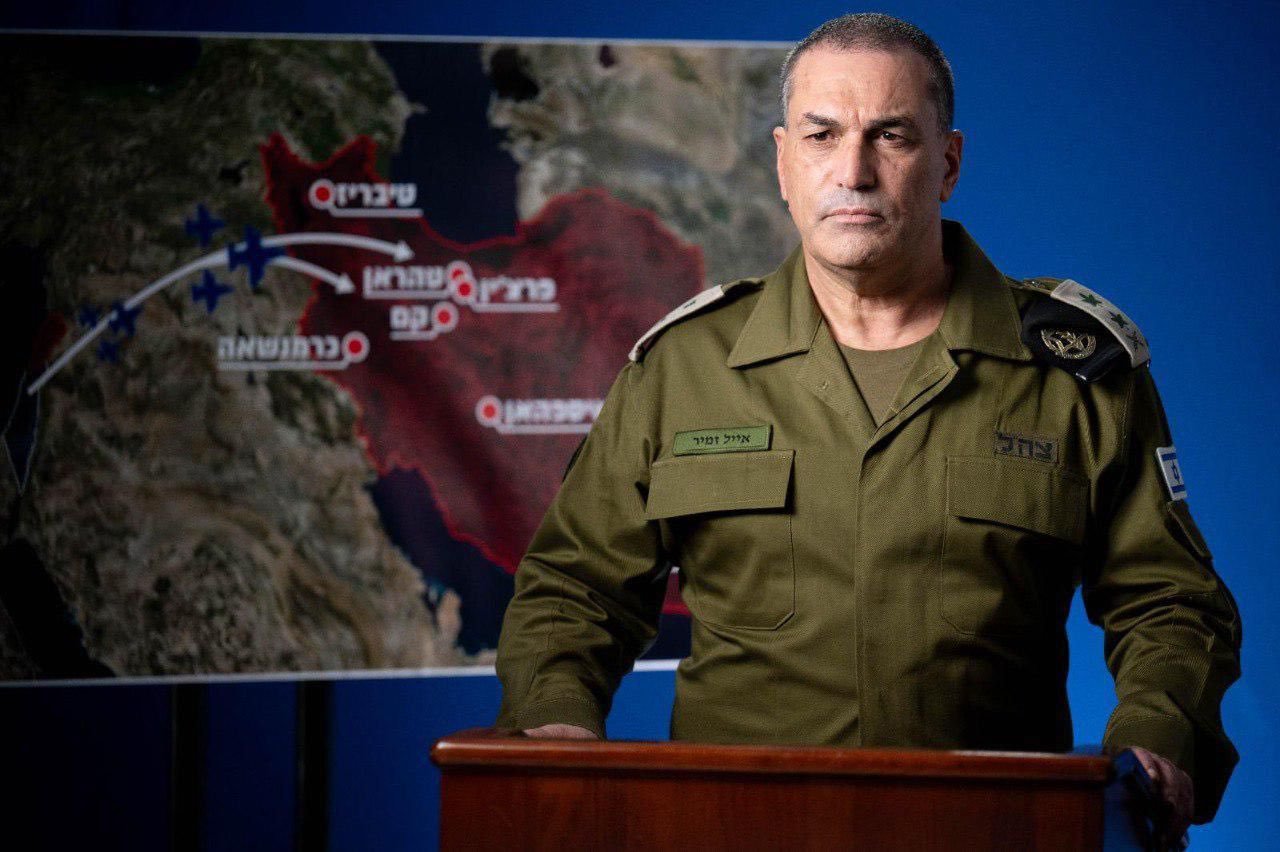
Operation Epic Fury is a joint U.S.–Israeli campaign against Iran. It is not an air campaign but a multi-domain pressure strategy lead by Air Power. The campaign is designed to cripple Iran’s political leadership, economy and military all simultaneously. The current strategic logic of the campaign strategy as analysed can be described as Rapid decapitation of Iran’s leadership, destroy Iran’s missile and nuclear infrastructure, neutralize Iran’s navy and control the Persian Gulf and Cyber and information warfare inside Iran. Many analysts think the ultimate goal appears to be regime change. On March 2, Secretary of War Pete Hegseth and Chairman of the Joint Chiefs of Staff Gen. Dan Caine held a joint press conference at the Pentagon. Hegseth argued the U.S. goal is not Iraq-like regime change: “We set the terms of this war, from start to finish. Our ambitions are not utopian. They are realistic, scoped to our interests and the defense of our people and our allies. This is not Iraq. This is not endless.”
The campaign has moved beyond the original “decapitation + infrastructure strike” concept. After the initial strikes, Iran retaliated with missile and drone attacks on Israel and U.S. bases across the Gulf, triggering a wider regional crisis. So, the US-Israel strategy shifted to defence and containment. The campaign has now expanded into economic and energy targets. This indicates a strategic shift toward economic pressure on the Iranian state. Early messaging framed the war as stopping Iran’s nuclear program but political messaging has shifted repeatedly, majorly implying regime change. So, the emerging strategy seems to be pressure and attrition, hoping that internal instability eventually weakens the regime. Another evolution is the multi-domain nature of the conflict. The war is now affecting global oil flows and shipping, not just military targets. The strategy has shifted from a short “decapitation strike” campaign to a longer pressure war. Secretary of War Pete Hegseth said that while there is no timeline for the military operation, there are clearly defined goals for what the United States hopes to achieve. In other words, Epic Fury now looks less like a quick knockout and more like a sustained campaign to weaken Iran’s state power.
The facts show that: the attackers have achieved tactical success but not strategic victory yet and this has created pressure to escalate further—while the defender tries to widen the war. The U.S.–Israel coalition is now facing what can be termed as strategic dilemmas which can shape the coming phase(s). This piece will discuss the dilemmas.
Firstly, since 28 Feb 26 the attacking coalition has hit thousands of targets and destroyed much of Iran’s air defences and military infrastructure. Even after the reported killing of the supreme leader, U.S. intelligence assessments say Iran’s governing system remains intact and capable of continuing the war. Therefore, the key political goal—breaking the Iranian regime—has not happened. If the regime survives, the dilemma could be that the war cannot end quickly and the coalition must either: escalate further, or accept a limited outcome.
Secondly, Iran cannot win a conventional air war so it has focused on asymmetric escalation. Iran has struck U.S. bases across the Gulf, launched missile attacks on Israel, attacked Gulf infrastructure, activated proxy groups across the region. Iran has also targeted radars supporting U.S. missile defense systems in Gulf countries using cheap drones. In such circumstances the coalition leaders could be faced with the dilemma of noticing Iran’s horizontal escalation i.e. Iran trying to spread the war across the region, increase economic damage and make the war harder to control geographically.
Thirdly, the most dangerous escalation point is the Strait of Hormuz, through which about 20% of global oil supply passes. Shipping disruption has already begun and oil prices are rising. If Iran tries to close the strait it could force the coalition into a large-scale naval war. This escalation would immediately transform the conflict into a global economic crisis.
Fourthly, another problem emerging after the first week is munition and interceptor depletion. U.S. lawmakers are warning that the war could drain critical weapons stockpiles. The question that arises here is that could it affect supplies to Ukraine, may be yes. The dilemma facing the coalition is to decide whether to escalate quickly to end the war, or slow down and risk losing momentum. Either choice has risks.
Recent strikes have expanded toward energy infrastructure inside Iran, including oil facilities near Tehran. These kinds of targets increase pressure on Iran to retaliate with more dramatic actions. In such a case one could speculate on mass missile strikes on Israeli cities, more attacks on Gulf oil facilities, proxy attacks worldwide. During World War I, U.S. inflation surged past 20% by 1918, while government debt nearly doubled as a percentage of GDP. World War II saw similar patterns, with inflation exceeding 11% and federal debt skyrocketing from 44% to over 119% of GDP. Historically, wars often escalate when economic targets are hit.
The most dangerous—scenario is major power involvement. Even indirect involvement could dramatically change the conflict. If a major power became more directly involved, the war could shift from: a regional war to a great-power confrontation. This is not likely to happen but there is reported intelligence sharing and cyber operations. Open weapons transfers would be inviting disaster there are already early signs of geopolitical spillover. One Iranian missile was intercepted near a NATO member state after flying across multiple countries’ airspace, raising alliance tensions. the U.S.–Israel coalition holds clear conventional military superiority, but Iran retains several asymmetric tools that can expand the war geographically and economically. Analysts often describe this as “military asymmetry vs. escalation leverage.” That means the war’s most dangerous phase may not be the opening strikes—but the moment when the conflict spreads beyond Iran itself.
Finally, the war is fundamentally about Iran’s nuclear capability. Can both sides see going nuclear as a last-ditch survival move. Iran supposedly has stockpiles of highly enriched uranium (around 60%), close to weapons-grade levels. Israel fears a future Iranian nuclear weapon while Iran fears regime destruction without nuclear deterrence. No open source has laid out how close is Iran to a nuclear bomb. In case, under heavy coalition attack, Iran assembles a rudimentary nuclear device quickly, not even test the weapon but simply announce that it has one. That alone changes the war. Could it be that Iran by spreading the war geographically is buying time to cross the nuclear Rubicon. This creates a security spiral where each side’s defensive move looks offensive to the other. Israel’s nuclear doctrine includes the “Samson Option”, a last-resort policy for situations where national survival is threatened. If, conventional bombing cannot eliminate Iran’s nuclear program, the coalition faces a dilemma. here is at what point, pressure grows for extreme measures to stop the program permanently.
It is no crystal gazing to see that the monetary drain on US due to this and Ukraine war is colossal. The coalition would want to force an early capitulation of the Iranian regime. This is easier said than done. These actions by US appear to be the proverbial getting on the back of a tiger and now getting off may need a Machiavellian effort. On the face of it the coalition is not left with very many options. The coalition has enough military power to damage Iran severely, but not necessarily enough to force regime collapse quickly. The coalition mandarins may squeeze Iran more economically by rapid escalation with attacks on Iran’s remaining leadership and nuclear sites or possible ground raids or special operations. This would surely invite regional war expansion with proxies hitting Israeli mainland and Gulf states become more active battlefields. The third possibility is a Negotiated ceasefire. That gap between military dominance and political outcome is what makes the next phase extremely dangerous. The prevailing and likely future battlefield dynamics requires a very mature and forward telling handling of this volatile inferno.


