
Operation Epic Fury is a major U.S.-led military operation launched on February 28, 2026, targeting Iran’s military infrastructure. It involves coordinated strikes by U.S. Central Command (CENTCOM) forces and Israel against Iranian targets like Islamic Revolutionary Guard Corps facilities, missile sites, air defences, naval bases, and drone launch points. President Donald Trump authorized it to counter Iran’s nuclear program, missile arsenal, proxy networks, and navy while aiming for regime change. Israel played a central role in the above Operation. Israel in the operation codenamed Roaring Lion (As a joint partner with the U.S) conducted parallel airstrikes on Iranian targets. Israeli Prime Minister Benjamin Netanyahu claimed responsibility for leadership decapitation strikes, reportedly killing Iran’s Supreme Leader Ayatollah Ali Khamenei, while focusing on ballistic missile sites in coordination with the U.S. U.S. strikes emphasized IRGC infrastructure, nuclear remnants, and naval forces, with Israel handling high-value leadership targets.
Over 1,000 targets were hit in the first 24 hours, with operations ongoing amid Iranian retaliation. Having built up the largest concentration of airpower in the region since 2003’s invasion of Iraq, the U.S. launched the operation in broad daylight, at 9:45 a.m. in Tehran on Feb. 28, or 1:15 a.m. Eastern Time. As reported, after talks on Iran’s nuclear arms and ballistic missile programs failed to progress toward a settlement Israel and the
U.S. acted based on intelligence identifying the precise location of Iran’s Supreme Leader, Ayatollah Ali Khamenei.
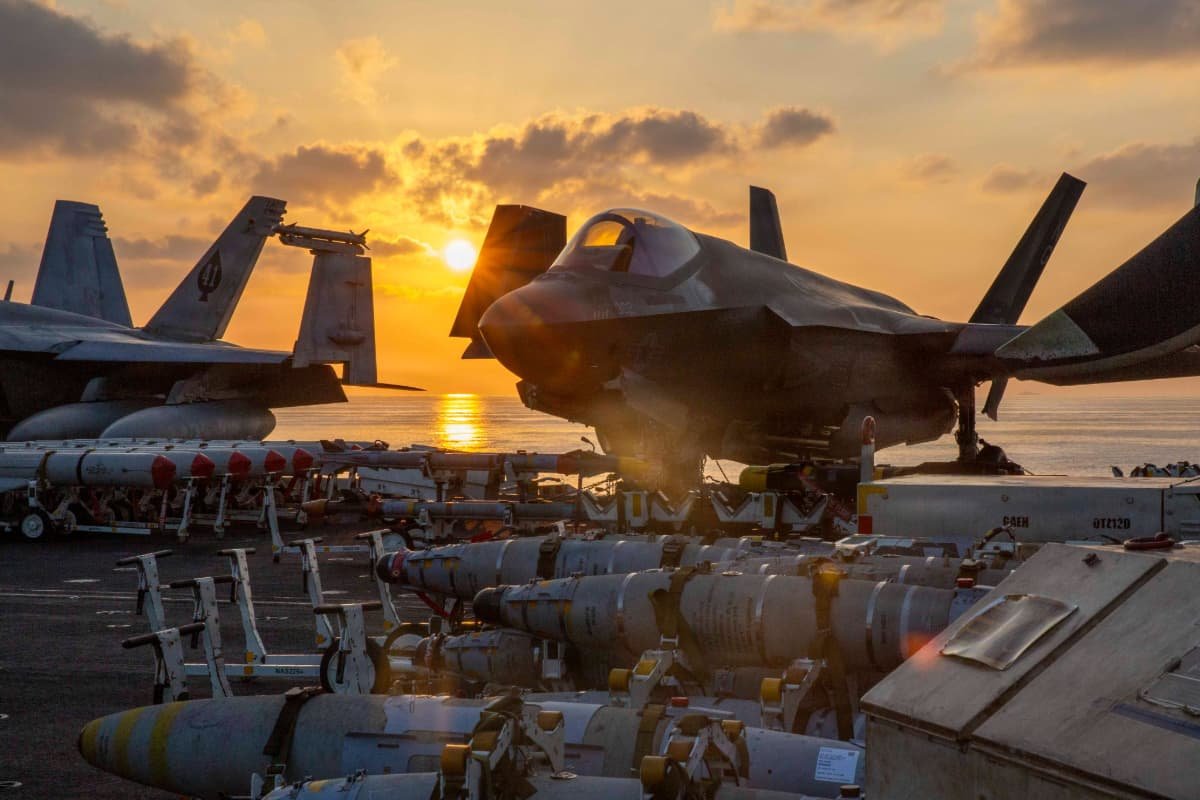
Since the start of Epic Fury and Roaring Lion the operations till date are predominantly air force operations. Air platforms allowed stealthy penetration, real-time sensor fusion, and Destruction/suppression of enemy air defences (D/SEAD). The operation integrated stealth, multirole fighters, drones, and support assets. Following are the US air assets in combat:
| Platform Type | Examples | Role |
| Stealth Bombers & Fighters | B-2 Spirit, F-22 Raptor, F-35 Lightning II | Penetrate defences, precision strikes, air dominance |
| Multirole Fighters | F-15, F-16,
F/A-18 Super Hornet |
Sustained strikes, escort, |
| Attack Aircraft | A-10 Thunderbolt II | Close air support, ground attack |
| Electronic Warfare | EA-18G Growler | Jamming radars, SEAD |
| Drones | MQ-9 Reaper, LUCAS (one-way | ISR, loitering strikes, affordable mass |
| Support | KC-135/KC-46 tankers,
E-3 AWACS, RC-135, E-11 BACN |
Refuelling, early warning, reconnaissance, Airborne Communication Relay Aircraft |
Israel’s forces, primarily the Israeli Air Force (IAF), contributed through massive airstrikes. The IDF launched Israel’s largest-ever air operation, deploying around 200 fighter jets that dropped over 1,200 munitions on nearly 500 targets in the first day. By day two, they conducted over 700 sorties, firing thousands of munitions to achieve air superiority over Tehran and strike air defences, missile launchers, military industries, command centres, and leadership sites. Key air platforms in action are:
| Platform | Role |
| F-35I Adir (stealth fighters) | Precision deep strikes, leadership decapitation |
| F-15I Ra’am (strike eagles) | Heavy munitions delivery, sustained bombing |
| Additional fighters (F-16s implied) | Escort, suppression of enemy air defenses |
The US-Israel wanted Air Superiority and got the same. This air superiority is one of its kind because it has not stopped Iran from firing its missiles and widening the scope of the engagement. Iran has proclaimed that it has targeted US interests in other middle east nations. Among other attacks Iran has reportedly struck Al Udeid Air Base in Qatar, Al Salem Air Base in Kuwait, Al Dhafra Air Base in the UAE, and the US Fifth Fleet base in Bahrain. The Al Jazeera report indicates that the origin of this specific retaliatory wave lies in Iran’s “Truthful Promise 4” operation, which seeks to impose a high cost on any nation harbouring “aggressor forces.” This is the very basic narrative emerging from this conflict which is becoming intense by the hour. This article will attempt to highlight that the US-Israel–Iran war is an extremely high‑risk attempt by Israel. With active US backing, to use military force to roll back Iran’s nuclear and regional capabilities and reshape the regional balance in its favour is an extremely tall ask.
Israel’s core aim is to prevent Iran from ever becoming a nuclear-armed power and to restore a decisive Israeli deterrent, while the United States is trying to both block an Iranian bomb and preserve its regional order, increasingly shading into an effort to catalyze political change in Tehran without triggering a prolonged regional quagmire. The confrontation has shifted from a long “shadow war” via proxies (Hezbollah, militias,
Hamas) to direct exchanges. The ideological layer is fundamental: post‑1979 Iran has made opposition to Israel’s existence and support for anti‑Israel armed groups a central plank of its regional policy. Israel on the other hand sees Iran’s missile and nuclear advances as an existential threat. Both sides read the current war not as a discrete campaign but as a decisive round in a decades‑long struggle for regional primacy and survival.
The official Israeli analyses after “Operation Rising Lion” in 2025 explicitly describe the central war aim as denying Iran any path to a nuclear weapon—through destruction of facilities, killing scientists and commanders, and then locking in intrusive IAEA monitoring or retaining the option for repeat strikes. Shmuel Even states that beginning in 2009, under the Netanyahu-Barak government, Israel devised a new strategy against the Iranian nuclear program that included: clandestine countermeasures , an intensive diplomatic effort, and the presentation of a concrete military option. The new (“current”) strategy was necessary because the previous strategy did not halt Iran’s progress toward the nuclear threshold. The new strategy’s success was proven by intensifying sanctions to a level that brought Iran to the negotiating table.
Operationally, Israel has targeted nuclear sites, missile infrastructure, and senior IRGC and proxy leadership, which fits an objective of long‑term degradation of Iran’s power projection capacity and restoration of Israel’s freedom of action on its borders. Israeli commentators also note that while Israel disavows “regime change” as a stated goal, some of the chosen targets—core regime infrastructure and even leadership nodes—are clearly meant to threaten regime survival if Tehran escalates, thereby tightening deterrence and possibly encouraging internal instability over time. This is not limited to degrading capabilities at the margins. It is a direct blow to the state’s security architecture and governing apparatus. The parallel with the 2003 Iraq war is difficult to ignore.
Firstly, Israel’s military strategy targeting Iran carries high risks due to potential escalation and proxy activations. Iran’s “Axis of Resistance” proxies like Hezbollah, Houthis, and Iraqi militias can launch multi-front attacks, overwhelming Israel’s defences as seen in past missile barrages. Hezbollah has already fired rockets into northern Israel in response to recent strikes, prompting Israeli counteractions in Lebanon. Houthis have
threatened to resume Red Sea ship attacks and have signalled intent for missile/drone strikes. These threats emerged on February 28, 2026, following US-Israeli strikes on Iran. Though these have not commenced but with alleged closure of Strait of Hormuz, the threat could be actioned. As it stands, this seems to be an open-ended conflict therefore strategic importance of the Strait of Hormuz, its forced closure and the cascading adverse effect of this closure on the world economy does not require second guessing.
Secondly, Israel’s military strategy has a significant regional fallout. Soon after the joint strikes, Iran launched a series of retaliatory missile and drone strikes across the region. It initially fired ballistic missiles toward Israel which Israel was largely able to repel. Iran also opted to go after U.S. military and Gulf civilian targets across several countries including Bahrain, Kuwait, Saudi Arabia, the United Arab Emirates (UAE), and Qatar. An Iranian attack damaged a terminal at the Dubai International Airport, the world’s busiest air hub, while airports in Abu Dhabi, Bahrain, and Kuwait also sustained damage from Iranian strikes. Several countries have closed their airspace, and airlines have suspended travel, cancelling thousands of flights and stranding tens of thousands of passengers. The simultaneous closure of the Gulf’s three major air hubs—Dubai, Abu Dhabi, and Doha—is unprecedented, with significant implications for trade and transport. If the conflict drags on, it could become a real turning point for the Gulf – one that reshapes how states think about security, alliances and even their long-term economic futures. For years, Gulf stability has leaned on the United States as the foremost safety underwriter and Iran was kept below the threshold of full confrontation. Gulf diplomacy had already been shifting – carefully, quietly and with a strong penchant for prevaricating. But a prolonged war would make this balancing act much harder to sustain.
Thirdly, the question being asked is will the strikes stop Iran from making the nuclear weapon? “A post-Khamenei Iran is not necessarily a post-Islamic Republic of Iran,” said Behnam Ben Taleblu, the senior Iran director at the Foundation for Defense of Democracies. “The Islamic Republic has been able to survive significant domestic and foreign pressure.” He argued that Iran’s government has survived by operating “in the gray strategically,” noting Tehran’s ability to keep both its nuclear and ballistic missiles program going for years despite international demands. What the strikes can realistically do is delay Iran’s ability to produce weapons‑grade material by destroying key facilities, centrifuges, and stocks, compelling time‑consuming reconstruction or forcing Iran to
adopt more covert pathways. This all depends on how the conflict and internal Iranian politics evolve. The core judgment is that kinetic action can buy time but not replace a long‑term strategy combining diplomacy, deterrence, and non‑proliferation tools. Post the strikes with no enduring political framework existing in Iran can these strikes provide a permanent solution to the nuclear issues is like crystal gazing with crystal turning opaque very fast. Therefore, only time will tell that the decapitation strike which killed Khamenei has actually stopped Iran in making its own Buddha smile. If that be so, one actually wonders what has Israel achieved amidst this blood bath?
Fourthly, Iran’s expected retaliation has triggered severe global economic disruptions. Iran’s IRGC imposed a de facto blockade on the Strait of Hormuz, halting nearly all tanker traffic. This has affected 20% of global oil supply plus significant LNG volumes. Brent crude surged up to 13% to $82 per barrel, with forecasts of $100–$130 if prolonged, acting as a “war tax” on energy. OPEC+ pledged extra output, but shipping reroutes via Africa’s Cape add weeks and costs to deliveries. It is the fourth day of the conflict and Global equities plunged, with trillions erased and Nikkei dropping 3%; crypto losing $128 billion in hours. Gold is past $5,000. Analysts warn of stagflation—slowing growth to 1.8–2% amid 2-point inflation spikes—forcing central banks to pause rate cuts. Supply Chains have been thrown into turmoil. Supply chain firms have suspended Strait and Red Sea routes. Air Travel has been hit by closure of major airports in middle east. Heightened insurance and crew refusals are adding to the growing miseries for the businesses. Projections for long-term global GDP losses from Operation Epic Fury remain preliminary, hinging on conflict duration. Early models estimate annual growth cuts of 1-2 percentage points, with trillions in cumulative foregone output over years. All this is a fallout after just 72 hrs. Economic fallouts will be many times graver than these figures especially when the contours and verifiable markers of the end of the conflict have not been announced either by US or by Israel.
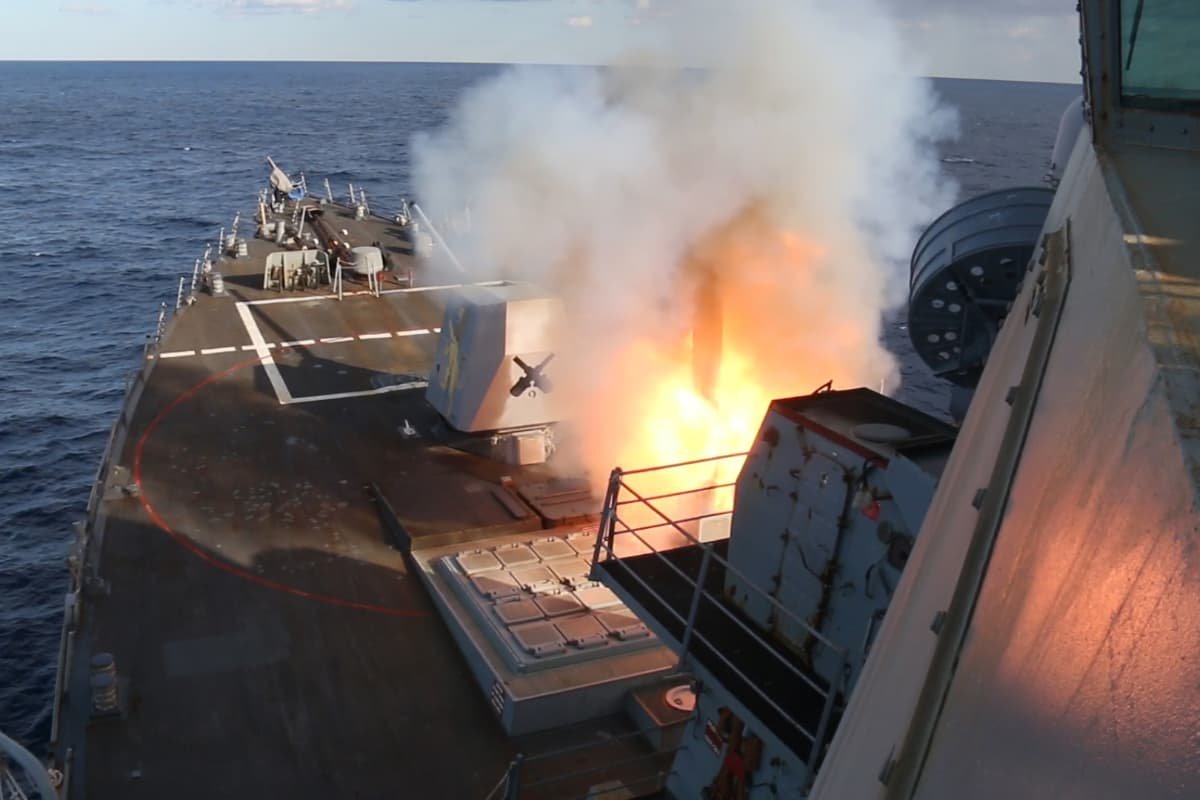
On 3 March 2026, John J. Mearsheimer commented that Trump administration was dragged into this war by Israel and its enormously powerful lobby in the US. He went on to add that both Secretary of State Marco Rubio and House Speaker Mike Johnson have admitted as much. Fifthly, it is important here to raise the all-important question as to how will the conflict end? What are the physical markers to call conflict to cease? Will the conflict terminate for good? Who will certify the said markers (If any) on the ground?
These questions have not been addressed by either US or Israel for the general public. On the face of it, as per the said aims victory for US and Israel requires not only regime change in Iran, but replacing the regime with new leaders who are acquiescent to Israeli and American needs. If those two things do not happen, what next? Will Iran be able to keep its nuclear enrichment capability; keep building ballistic missiles, cruise missiles, & long-range drones; and keep supporting Hamas, the Houthis, and Hezbollah? The US and Israel are waging the war to prevent Iran from continue doing which it is being alleged. Therefore, the question now is to what extent will US and Israel go to achieve their aims? Answer to this question can best be answered by the two administrations but till the time the answers are given the world will be kept hostage to the trappings of the current US-Israel-Iran war. World needs to remember that in the Vietnam War, the US won virtually every battle and yet lost the war. With UNSC being what it is one really wonders what are the checks and balances to prevent this conflict spiralling out of control.
Sixthly, for those who are working for permanent solutions, it needs to be remembered that US-Israeli military strikes can delay but may not eliminate Iran’s nuclear programs permanently. Most analysts point out that the strikes cannot permanently remove nuclear know-how, personnel, or hidden capabilities. Iran has skilled scientists, dispersed infrastructure, and technical expertise that could be reconstituted over time. If all of this has be destroyed one shudders at the scale of destruction and the fallout of the same. It needs to be remembered that attacks on nuclear sites can make a regime more determined to rebuild its capacity or to hide sensitive capabilities underground or in secret locations—making future detection and restraint harder. Many experts emphasize that lasting solutions rely on a combination of pressure, diplomacy, monitoring, and legal agreements rather than military force alone. Are US and Israel ready to go down this path –is a million dollar question answer to which is being breathlessly awaited world over.
Finally, it needs to be highlighted that the current conflict in the middle east stands as a defining moment for the Middle East with generational implications for the region’s trajectory, highlighting the prospect of longer-term instability. The region has entered a period of unprecedented uncertainty. Even if an uncontested successor is named to Ayatollah Ali Khamanei there will be significant flux between competing power centres. If the regime collapses (Potentially possible) it will spark internal chaos in Iran. Spillover impacts to this scenario can be catastrophic for Iran. Are US and Israel scheming this? If yes, then they are not realising the cost they are imposing on world population.
Normatively, the campaign is being waged in a region already devastated by multiple wars, grey zones around use of force, and the possibility of further erosion of international norms on sovereignty and non‑proliferation. Each side justifies escalation in terms of existential security, suggests a cycle of conflict rather than a sustainable strategic end‑state.
In hard strategic terms, Israel and the US may achieve substantial kinetic success— destroying facilities, killing leaders, and delaying weaponization timelines—but all this could be at the cost of entrenching Iranian nationalism, incentivizing further clandestine nuclearization, and driving Tehran even more toward asymmetric retaliation and non‑state proxies. The war also poses serious systemic risks: disruption of oil flows, wider missile and drone attacks across the region, and further polarization of the international system, which directly affects countries like India that depend on Gulf energy and stability but seek balanced ties with all major players. So, my bottom line is that neither US nor Israel seems to have a clear, realistic political end‑state that guarantees durable stability once the bombing stops.


