
Strategic autonomy has become the defining phrase of India’s foreign policy, the flavour of the season in a global discourse on geopolitics. But in a world where the major powers are jostling for influence, what does strategic autonomy look like for an aspirational country at the threshold of rising to become a power in its own right, without being boxed in?
For India, strategic autonomy is not a nostalgic return to the Cold War non‑alignment. It is a far more assertive idea: the freedom to choose partners issue by issue, the flexibility to cooperate without being captured, and the confidence to say “yes” or “no” based purely on national interest. It does not imply equidistance, but staying effective, not avoidance-driven but seeking leverage in the national interest.
The Ukraine war made this clearer than any policy document ever could. India abstained at the UN a dozen times, avoided naming Russia as the aggressor, and expanded Russian oil imports from 2 percent to over 35 percent. Simultaneously, it deepened military cooperation with the United States in the Indo‑Pacific and held its ground against Chinese pressure along the Line of Actual Control (LAC). Each decision had its logic. Together, they showed the agility—and the strain—of India’s strategic autonomy.
The real question is not whether India should continue to pursue strategic autonomy, because that is not debatable. The only question worth asking is whether this form of autonomy is giving India more leverage or simply buying time. Some clues can be read from the world’s response India’s policy of strategic autonomy.
The United States: High Expectations, Uneasy Edges
In Washington, India is regarded an indispensable partner in the Indo‑Pacific. For decades, the US nurtured its relationship with India as a large, democratic, strategically located, and willing to be a bulwark against authoritarian China. Defence cooperation has grown rapidly: more exercises like the annual Yudh Abhyas (the author led a brigade in one of its earlier editions) and more intelligence sharing have led to greater interoperability. Beginning with the easing of nuclear restrictions after the marathon parleys between Jaswant Singh-Strobe in the early 2000s, the US has continued to open doors to advanced technologies that were once unthinkable.
Yet American policymakers have occasionally voiced a concern: India is still too cautious and hedges as a policy. The QUAD works for India precisely because it avoids binding commitments. But for the US, this informality sometimes feels like India wants the benefits of partnership—deterrence, technology, diplomatic support—without the political alignment that usually accompanies them.
This criticism misses a crucial point. India’s caution is not indecision; it is geography. Unlike US allies in Europe or East Asia, India faces two nuclear‑armed adversaries on its borders, one of whom is relentless in inflicting terrorist violence on India. It cannot afford rigid alliances. Strategic autonomy is not a diplomatic indulgence; it is a strategic necessity.
Still, India must ensure that autonomy does not look like hesitation. Influence grows when partners see consistency, not just intent.
Russia: A Relationship Running on Momentum
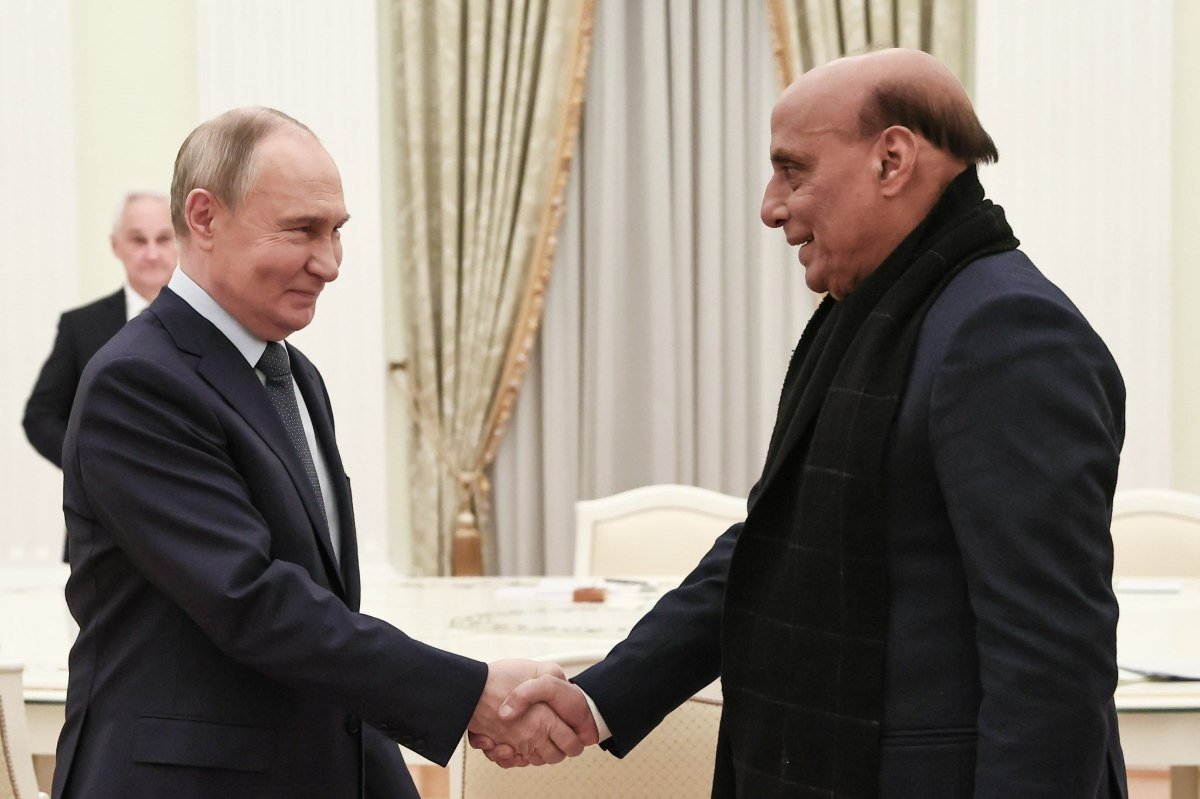
India’s ties with Russia have drawn global scrutiny since the Ukraine war. Expanded oil imports and high‑profile meetings have created an impression of continuity. But the reality is more nuanced.
But the reality also is that India’s dependence on Russian defence equipment has been declining for years. In 2010, Russia supplied over 70 percent of India’s defence imports; today it is closer to 45 percent and falling. New‑generation defence cooperation has slowed, and Russia’s growing closeness to China has reduced the comfort India once enjoyed.
For Moscow, India is a useful symbol of non‑Western partnership. For New Delhi, Russia remains relevant for legacy platforms, spare parts, and diplomatic balance. But it is no longer the strategic anchor it once was when it actively stood by India in the run-up to the Indo-Pak war of 1971 by signing the Treaty of Peace, Friendship, and Cooperation.
This shift is not a failure of autonomy. It is a natural evolution driven by diversification, Russia’s own limitations, and India’s expanding options.
China: The Neighbour That Shapes Everything
China is India’s most consequential challenge—militarily, economically, and geopolitically. From Beijing’s perspective, India’s strategic autonomy has not deterred Chinese assertiveness. Despite multiple rounds of talks and confidence‑building measures, China continues to test India along the LAC. The 2020 Galwan clash—the first deadly encounter in decades—was a brutal reminder that China could take risks to alter the status quo.
India has responded with a prudent mix of firmness and restraint: forward deployments, infrastructure upgrades like the recently upgraded Nyoma airfield, and the Sela tunnel, and a clear refusal to accept unilateral changes. But China still sees India as cautious—capable but unwilling to escalate. This perception matters because deterrence is as much about signalling as it is about strength.
Yet India cannot afford permanent hostility with China. Geography demands realism and China is not just a rival; it is a neighbour with whom India shares a 3,400‑km border and a massive trade relationship. China is already one of the two powers in an increasingly bipolar world. Stabilising the relationship is not a concession; it is a strategic necessity.
The key is to separate engagement from accommodation. Engagement prevents crises while accommodation accepts unfavorable outcomes. India must do the former without slipping into the latter.
This requires discipline: steady military signalling, controlled economic exposure, and avoidance of political theatrics. Compete where necessary, cooperate where possible, and deter where required—without letting China dominate India’s strategic imagination. But the bottom-line is that India would do well to improve its relationship with China. This is a pivot worth making.
Domestic Strength: The Real Backbone of Autonomy
No country becomes a great power while battling internal weaknesses. India’s domestic challenges—economic inequality, job creation, manufacturing depth, and social tensions—are real. But they must be seen in context.
India remains one of the fastest‑growing major economies. Its digital public infrastructure—from Aadhaar to UPI—is now a global reference point. Its democracy, despite noise and friction, remains resilient. Social tensions exist, but they have not led to institutional breakdown.
Still, domestic constraints shape external influence. India’s manufacturing base is improving but not yet deep enough to absorb large‑scale supply‑chain shifts away from China. Defence production has made progress—witness the BrahMos export to the Philippines—but remains limited in scale and sophistication. Surge capacity, essential in prolonged conflict, is still modest.
These must not be seen as signs of stagnation. They are signs of a country in transition—moving from a developing economy to a major power. Strategic autonomy is meaningful only when domestic capacity keeps pace with external ambition. India is on that path, but the foundation is still being built.
Deterrence: The Missing Link in India’s Rise
India increasingly recognises the reality of a two‑front challenge, a situation even more complicated because of Bangladesh’s internal instability. Military modernisation is underway, budgets have grown, and operational experience is substantial. But deterrence is not built on intent alone. It requires sustained capability, industrial depth, and the ability to impose costs.
India’s defence industrial base is improving but still relies heavily on imports for critical technologies. Production timelines remain slow. Integration into global supply chains is limited. These gaps matter because India’s primary security challenges are immediate and proximate.
Strategic autonomy cannot become a substitute for preparedness. Autonomy must be backed by credible military power and economic mass. These cannot be improvised; they require long‑term investment and political discipline. The key is to take a long-term view and develop capabilities even if bigger sacrifices of budgetary allocations need to be made.
Strategic Discipline: The Next Phase of Autonomy
For strategic autonomy to remain credible, India must practise strategic discipline. Not all threats or partnerships are equal. India must rank its interests and allocate resources accordingly. Summits matter, but we must continue to focus more on outcomes rather than optics. Implementation matters more and real influence comes from agreements that work and institutions that deliver. To match our ambition with capability, our national focus should be to increase the manufacturing depth and defence production. Foreign policy must be sequenced to domestic capacity. Also, we must continue to make selective but firm commitments. Autonomy does not mean avoiding commitments but choosing them carefully. Limited, well‑designed commitments can enhance leverage. Finally, we should have a multi‑track China strategy, one that has deterrence, engagement, and competition on parallel tracks. Qualitative improvement of relations with China will strengthen our hand and remove a few vulnerabilities.
Conclusion: Autonomy Must Be Earned, Not Asserted
In a fractured world, strategic autonomy remains India’s best option. It protects sovereignty, preserves flexibility, and reflects India’s historical experience with great‑power politics. But autonomy without capability invites pressure. Autonomy without credibility risks overstatement.
India’s challenge is not to abandon strategic autonomy but to anchor it more firmly in domestic strength, military preparedness, and disciplined prioritisation. As India’s interests expand, its means must expand too. Freedom of choice in geopolitics is not a declaration; it is an achievement.
India is on that path. The task now is to stay the course with clarity and discipline.


